
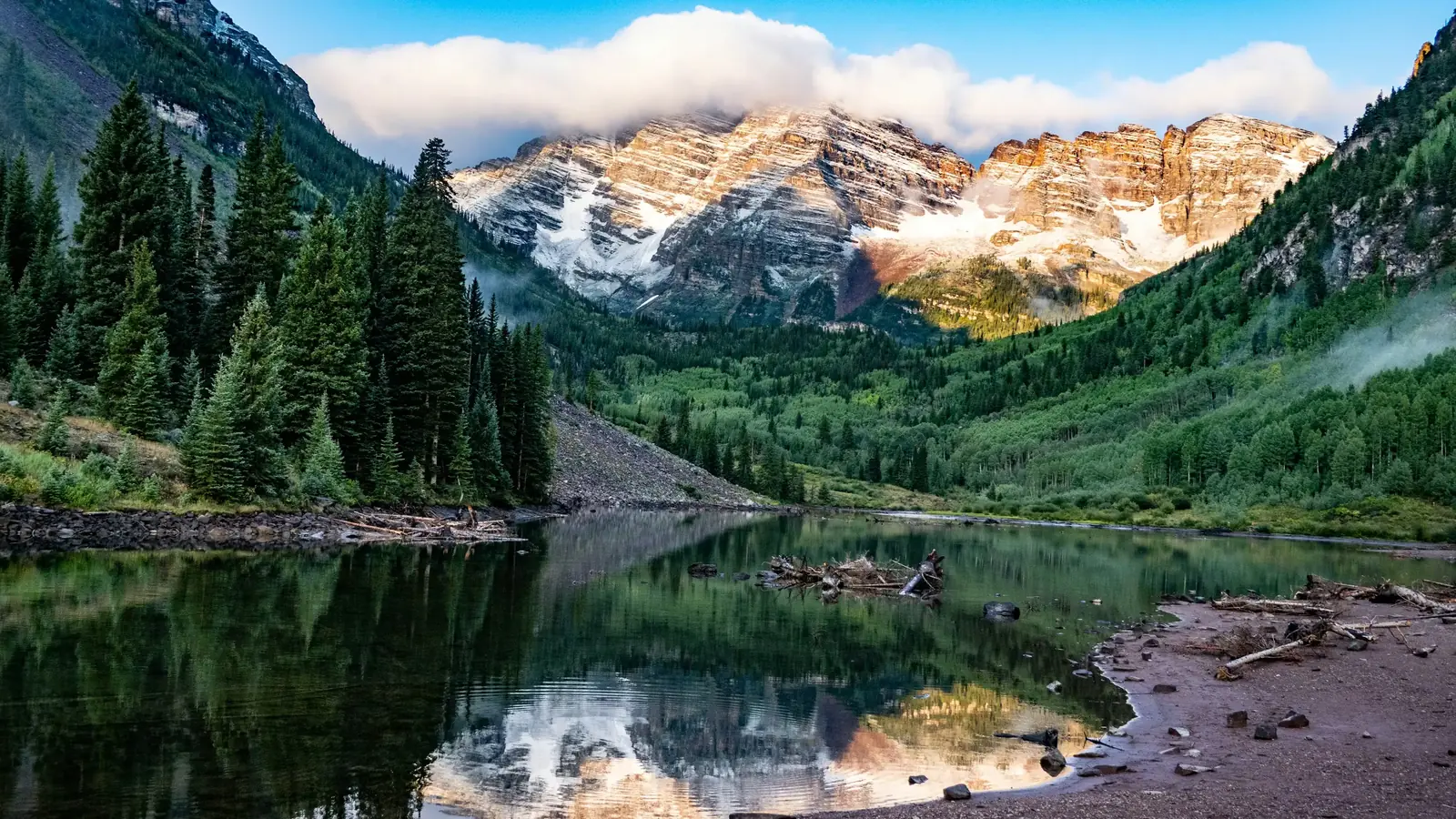
The Vibe
Salida is a river town that got an arts district and did not lose its soul. The Arkansas River runs through the center of downtown. The entire downtown is on the National Register of Historic Places. The mountain biking is among the best in the country. It sits at 7,000 feet in the shadow of fourteen 14,000-foot peaks and somehow stays affordable, creative, and unhurried. People move here on purpose and stay for good. The population has nudged upward in the last decade, but Salida still feels like the town it was in 1995, just with better food.
The town was founded in 1880 as a railroad division point on the Denver & Rio Grande Western line. The name means "exit" in Spanish, a reference to the point where the Arkansas River leaves the Upper Arkansas Valley and enters the Royal Gorge canyon downstream. The railroad brought the population. The railroad left in the 1990s. The river brought the culture. The surrounding peaks brought the outdoor economy. The arts scene emerged in the 1980s when a group of working artists realized they could buy storefront buildings downtown for the cost of a compact car. The buildings are not that cheap anymore, but the artists are still here.
Salida is the creative center of the Upper Arkansas Valley. The downtown along F Street and First Street has more working-artist galleries per capita than any town in Colorado. These are not gift shops selling mass-produced prints from elsewhere. These are potters throwing wheels in the back, painters with wet canvases, metalworkers running forges. The monthly First Friday art walk draws locals and visitors into studios where you watch the work happening. The SteamPlant Event Center, a converted 1887 hydroelectric plant on the river, hosts concerts, theater, and community events year-round. The space was saved by a community effort in the early 2000s and is now the cultural anchor of the valley.
The outdoor access is remarkable for a town this size. The Arkansas River provides Class III and IV whitewater through Browns Canyon National Monument just upstream, designated by President Obama in 2015. The Monarch Crest Trail from Monarch Pass is one of the best high-altitude mountain bike rides in the world and draws riders from Europe and Japan in September. Five 14,000-foot peaks sit within an hour's drive: Shavano, Tabeguache, Antero, Princeton, and Yale. The S Mountain trail system, built by the local mountain bike community, starts at the edge of town and offers more than 30 miles of singletrack.
Who lives in Salida tells you what kind of town it is. River guides. Bike mechanics. Potters and painters. Retired teachers who moved from the Front Range. Young families who wanted out of Denver and Boulder. Remote workers who realized they could live somewhere interesting and still collect a coastal paycheck. The median income is modest by Colorado mountain-town standards. The real estate is climbing but still accessible compared to Aspen, Vail, or Telluride. A two-bedroom bungalow within walking distance of downtown can still be had for under $600,000, which is expensive for Chaffee County but a bargain for any Colorado resort town. There is no ski resort in Salida. No chairlift in town. No corporate branding. Salida remains its own thing.
Who visits is the outdoor Colorado crowd. Rafters from Texas in June. Mountain bikers from the Front Range in September. Climbers heading to Hartman Rocks 90 minutes west. Fly fishers on the Arkansas year-round. The arts crowd for First Friday. Aging hippies for the hot springs at Mount Princeton. The mix is uncurated and the town benefits.
The economy runs on tourism, outdoor recreation, and a handful of remote-work transplants who found they could build their companies from a converted garage with a view of Mount Shavano. The hospital at Heart of the Rockies is the largest employer after the school district. The river brings roughly $60 million a year to the local economy through rafting and fishing outfitters. That number holds even in drought years because the Arkansas is dam-regulated and the release schedule stays predictable.
Where to Eat
The Fritz on F Street is the gastro-lounge that locals use as a default dinner spot. The smash burger at $16 is the order, with the truffle fries at $10 as the essential side. The fried chicken sandwich at $17 is the other move. The craft cocktails are thoughtful and the bartenders know what they are doing. The patio fills fast in summer. The vinyl-heavy sound system plays jazz and soul through the dinner hour and gets louder after 9 PM. Open for dinner and late-night, kitchen until 10 PM. No reservations. The bar seats a dozen and turns over.
Amica's Pizza on East Sackett Avenue serves the best New York-style pizza between Denver and Grand Junction. A cheese slice runs $5. The white pizza with ricotta, garlic, and fresh mozzarella at $24 for a whole pie is the move. Cash only. BYOB with a corkage-free policy. The crust is thin and the char is right. The shop is small with eight tables. Most people take their slices to the riverside park a block away. Open for lunch and dinner, closes at 8 PM. Closed Tuesdays.
Moonlight Pizza & Brewpub on East First Street brews its own beer and fires its own pies in a wood-burning oven. The Monarch Pass IPA is the flagship. The Pilsner is the summer patio beer. The green chile pizza at $20 is the local favorite. The Cuban pizza with pulled pork, ham, and pickles at $22 is the underdog. Six to eight house beers on tap at any time. Locals eat here multiple times a week. Not a tourist spot. The patio has river views. Open for lunch and dinner.
Sweetie's Sandwich Shop on F Street makes pressed sandwiches on bread baked that morning. The cubano at $14 with slow-roasted pork and house pickles is the signature. The roast beef with horseradish cream at $13 is the close second. The Italian at $14 is the third. Everything is made to order. Small space, mostly takeout. Open 10 AM to 3 PM. Closed Sundays. Good fuel for a river or bike day.
The Laughing Ladies on South First Street is the fine dining option and the anniversary destination. Seasonal American food in an intimate room with exposed brick and pressed-tin ceilings. The duck breast at $42 and the Colorado lamb at $44 are the highlights. The trout at $36 is the non-meat option. The wine list goes deeper than a town this size should support, with a strong Rhône Valley section and several Colorado producers. Reservations recommended. Open for dinner Thursday through Monday. The service is warm and the room is quiet enough to talk.
Currents on Sackett Avenue sits on the banks of the Arkansas River. The menu is American bistro. The trout almondine at $28 and the steak frites at $36 are the reliable orders. The real draw is the patio, which extends over the river on a wooden deck. You eat with the sound of the current below and the light fading on the mountains across the valley. Summer evenings here are as good as dining gets in the Arkansas Valley. Open for lunch and dinner. Reservations recommended for dinner on weekends.
Little Red Hen Bakery on G Street does the morning pastries. The breakfast sandwich on a buttermilk biscuit at $9 is the fuel for a river morning. The cinnamon roll at $5 is the pastry if you only order one. The drip coffee is Ozo from Boulder. Open 6:30 AM to 1 PM. Closed Sundays. The outdoor bench overlooks F Street and is the best morning people-watching seat in town.
Cafe Dawn on D Street is the coffee shop that doubles as a remote-worker office. The flat white is made properly. The avocado toast at $12 is the non-pastry option. Strong WiFi. Plenty of outlets. Open 6:30 AM to 3 PM. Quieter than Little Red Hen and with more room to spread out a laptop for a morning.
Benson's Tavern & Beer Garden on F Street is the new-school tap house with 24 rotating taps focused on Colorado and Mountain West brewers. The menu runs to elevated bar food: the smoked wings at $14, the pretzel with beer cheese at $10, the brisket sandwich at $18. The beer garden out back is the summer destination and has picnic tables, heaters for spring and fall, and a small stage for live music on weekend nights.
The Boathouse Cantina on East Sackett is the Mexican and river-vibe spot. Strong margaritas, fish tacos at $14, and a patio directly on the river. The guacamole is made tableside. The carnitas plate at $22 is the weekend move. Summer evenings on the patio with a margarita and the sound of the river are the Salida experience in the single strongest form.
Fika Coffee House on First Street is the Swedish-style coffee bar with pastries, open-faced sandwiches, and a quiet reading room upstairs. The cardamom bun at $5 is the item. Open 7 AM to 4 PM. Closed Mondays. This is where you end up when you want to read a book for two hours without anyone bothering you.
Where to Stay
The Palace Hotel is a restored 1909 hotel on First Street. Each room is different, with exposed brick, claw-foot tubs, and original woodwork. Rooms from $160 in summer, $120 in winter. The building has more character than any chain hotel in the valley. The common areas display rotating art from local galleries. Walking distance to every restaurant and bar in town. Ask for a second-floor room facing First Street for the mountain view. No elevator, which is a consideration for anyone with mobility issues.
Simple Lodge & Hostel on E Street offers private rooms and shared dorms in a renovated motel. Clean, affordable, and run by people who mountain bike every morning before opening up. Private rooms from $90 in summer, $75 in winter. Dorm beds from $45. The common room has a gear storage area, a kitchen for cooking your own meals, and a bike tuning stand. The owners know the best trails for every skill level. This is where the bike and river community stays. Walking distance to downtown.
The Tudor Rose Bed & Breakfast on Paradise Road is a handsome Tudor-style home with six rooms on six acres. Full breakfast included. Gardens, a patio, and views of the Sangre de Cristo range. Rooms from $180. The innkeepers are knowledgeable about the area and the breakfast is real cooking, not just muffins and fruit. Quieter than downtown. A five-minute walk to F Street along a residential neighborhood.
Riverside Campground sits on the Arkansas River at the north end of town. Tent sites from $35. RV sites with hookups from $55. Walking distance to downtown and directly on the river. The tent sites along the river are the best. Shade trees. Running water. Clean bathrooms. Open May through October. Book ahead for June and July when the rafting season peaks.
Surf Chateau on First Street is the boutique hotel that opened in 2019. Twelve rooms in a renovated historic building with a rooftop hot tub and a ground-floor restaurant and bar. Rooms from $240 in summer. The rooms are modern with vintage touches. The rooftop has views of the Sangre de Cristo range and the Arkansas River. Walking distance to everything.
Amigo Motor Lodge on East First Street is a reimagined 1950s motor lodge with Airstream rentals on the property in addition to the motel rooms. Rooms from $160. Airstreams from $220. The property has a pool, fire pits, and outdoor lounge areas. Good for a mid-range stay with more personality than a chain hotel.
Mount Princeton Hot Springs Resort, 22 miles north of Salida in Nathrop, offers lodging with hot springs access included. Cabin rooms from $260. Cliffside Suites from $380. The resort is on the banks of Chalk Creek with the hot springs pools on site. A good option if the hot springs are central to your trip. The drive to Salida for dinner is 25 minutes.
Vallie Brook Cabins outside of town offers private cabins on private land with fire pits and hot tubs. Cabins from $220. Good for couples who want privacy and quiet rather than downtown walking access. A ten-minute drive to F Street.
What to Do
Raft the Arkansas River through Browns Canyon National Monument. Class III and IV rapids through a granite canyon with no road access. Half-day trips start at $75. Full-day trips at $130 with lunch on a sandy beach. Peak water is June when snowmelt surges the river. The canyon section is the best intermediate whitewater in Colorado. Rapids have names like Zoom Flume, Seidel's Suckhole, and Raft Ripper. Outfitters handle all the logistics. Half-day trips put about three hours on the water. The full day includes a canyon lunch stop and twice the river miles. July and August mellow the water to Class III. September through mid-October runs colder and lower but remains navigable. Major outfitters include Echo Canyon, Arkansas River Tours, and Performance Tours.
Mountain bike the Monarch Crest Trail. A point-to-point ride starting at 11,312 feet on the Continental Divide at Monarch Pass and descending through alpine tundra and aspen forests to the Rainbow Trail. Thirty-four miles total, though shorter variations are possible. Shuttle services from town run $45 and include a ride to the pass with your bike. The Crest is among the most scenic mountain bike rides on earth. The first miles run along the Divide at 12,000 feet with views in every direction. The middle section descends through old-growth spruce. The final descent through aspen groves in late September, when the leaves are gold, is one of the great mountain bike experiences anywhere. Advanced fitness required. Allow six to eight hours. Water and food are essential. No services on the trail. Cell service is minimal to none. Bring a satellite messenger.
Walk the Salida Creative District along F and First Streets. Galleries, studios, and small shops. The First Friday art walk on the first Friday evening of each month runs from 5 to 8 PM and includes live music and wine pours at participating galleries. The SteamPlant Event Center on the river hosts concerts and theater in a converted power station from 1887. Good for a rest day between river and trail. Many artists work in their studios during gallery hours and will talk about their process. The SteamPlant calendar runs from indie bands and folk acts to community theater to classic film screenings.
Hike a fourteener from the Salida area. Mount Shavano at 14,229 feet and Tabeguache Peak at 14,155 feet can be combined in a single long day from the Blank Gulch trailhead. The round trip for both is 12 miles with 5,200 feet of elevation gain. Start before 5 AM to be off the summit before afternoon lightning. Mount Princeton at 14,197 feet via the east slopes is a more moderate option at 8 miles round trip with 5,400 feet of gain. Mount Antero at 14,269 feet is reachable via a high-clearance 4WD road most of the way up, making the summit hike itself only 4 miles round trip. No technical climbing required for any of these but the altitude demands respect. Bring layers, twice the water you think you need, and turn around if weather moves in.
Soak at Mount Princeton Hot Springs Resort, 22 miles north of Salida in Nathrop. Natural hot springs pools on the banks of Chalk Creek with views of the Collegiate Peaks. Day pass $30 for adults. The creek pools, where hot spring water mixes with cold creek water in shallow rock-lined pools, are the best part of the experience. In summer, you sit in the creek and find your ideal temperature by moving between hot and cold flows. The resort also has an infinity pool, waterslides for kids, and spa services. Open year-round. Winter soaking with snow around you and steam rising is the best seasonal window.
Ride the S Mountain Trail System from the edge of town. A network of singletrack trails built and maintained by the local mountain bike community. Trails range from beginner flow lines to advanced technical descents. The main loop takes about an hour. Views of the town, the river, and the Sangre de Cristo range from the upper trails. Trailhead is at the corner of Holman Avenue and Highway 291. No fee. No shuttle needed. Ride from town. Winter riding is possible on fat tires when the trails freeze.
Fly fish the Arkansas River year-round. The river is gold-medal water from just upstream of Salida down through Bighorn Sheep Canyon. Brown trout dominate with some rainbows. The section through town has public access from multiple parks. The catch-and-release stretch below Ruby Mountain is the most productive. Arkansas River Fly Shop in downtown Salida runs guided trips from $350 for a half day. September through November is the best stretch for experienced anglers when the crowds thin and the brown trout feed aggressively before spawning.
Climb at Turtle Rocks or Penitente Canyon. Turtle Rocks is a granite bouldering area ten minutes from town with problems in every grade. Free. Penitente Canyon is 90 minutes south and one of the premier sport climbing areas in Colorado, with more than 300 bolted routes on welded volcanic tuff. Good for a day trip from Salida. Primitive camping at the canyon.
Ski Monarch Mountain in winter. A 1,635-foot vertical, 800-acre ski area at the top of Monarch Pass, 20 minutes west of Salida. Lift tickets at $99 are among the lowest in Colorado. Annual snowfall of 350 inches rivals Steamboat. The backside, Mirkwood Basin, requires a short hike and delivers expert terrain with no crowds. No high-speed lifts. No condos at the base. No marketing budget. Locals protect the place. Weekends in January and February are the best powder windows.
Drive the Top of the Rockies Scenic Byway north from Salida to Leadville. Highway 285 to Buena Vista, then Highway 24 north through the Arkansas headwaters to Leadville. The drive is 60 miles one way through the Collegiate Peaks and past ghost towns from the 1880s silver boom. Allow three hours for the round trip with stops. Leadville itself deserves an afternoon and has its own restaurants, a historic district, and the Matchless Mine tour.
Attend FIBArk Whitewater Festival in mid-June. The oldest whitewater festival in North America, running since 1949. Four days of kayak races, SUP competitions, raft rodeo events, and live music at Riverside Park. Free to attend most events. The festival draws a real crowd. Book lodging three months ahead if you plan to visit during FIBArk weekend.
Visit Salida Hot Springs Aquatic Center downtown, a public indoor hot springs pool open year-round. Day pass $13. The pool uses the same mineral water as the commercial resorts but in a simple municipal setting. Good for a quick soak without the Mount Princeton drive.
When to Go
September for mountain biking and fall color. June for peak river water. The two windows are the best in the Salida year.
The best single month is September. The river is still runnable at Class III. The mountain bike trails are in peak condition with the summer heat gone and the first aspens turning. The aspens on Monarch Pass and along the Collegiate Peaks turn gold between September 20 and October 5. Temperatures sit in the 60s and 70s during the day and drop into the 30s at night. The restaurants are not jammed. The art galleries are open. Everything works.
Summer peaks in June and July with FIBArk, the rafting season, and the Fourth of July. August brings afternoon thunderstorms and slightly lower river levels. The town is busy on weekends but never overwhelming. Salida does not have the infrastructure to be overrun, which is part of its appeal. Midweek days in summer are much quieter than Saturday.
Winter is quiet but alive. Monarch Mountain draws skiers on weekends. The town at 7,000 feet rarely gets heavy snow and the roads stay clear most of the season. Sunny days in January hit the 40s. The hot springs at Mount Princeton are at their seasonal best with snow around the pools and steam rising. Cross-country skiing on Monarch Pass is excellent. Hotel rates drop 30 to 40 percent.
Avoid the FIBArk festival weekend in mid-June if you want a quiet visit. Or embrace it for the energy of the oldest whitewater festival in the country. The third weekend of June is typically the peak. Labor Day weekend is also busy, though not as chaotic as FIBArk.
The shoulder months, April and November, are slow. Some restaurants reduce hours. The river is too cold and too low. The trails may be muddy. But the town is empty and the light is beautiful. Good for artists, writers, and anyone who wants to rent a cabin for a week and work.
The festival calendar has more than FIBArk. First Fridays run year-round with the biggest crowds in summer. The Salida Riverside Fine Arts Festival in mid-June coincides with FIBArk and brings juried artists to booths along the river. The Salida Spirits Festival in late August features Colorado distilleries. The Monarch Mountain Craft Beer Festival in early September combines beer, bands, and fall color. The ArtWalk in late June shifts the monthly First Friday to a three-day weekend event.
Getting There
Salida is 140 miles southwest of Denver. The drive takes two and a half to three hours via Highway 285 south through Conifer, Fairplay, and over Trout Creek Pass at 9,346 feet. The route follows the South Platte River through South Park, a vast high-altitude grassland ringed by mountains. The drive is easy, two-lane for most of the distance, and scenic. No tunnels. No canyon traffic. One of the most pleasant drives in Colorado. Weekend traffic picks up on Friday afternoons heading south and Sunday afternoons heading back to Denver, but the volume is manageable compared to I-70.
An alternate route follows I-70 west to Copper Mountain, then Highway 91 south through Leadville and Highway 24 east over Tennessee Pass before joining Highway 285 south. This route is longer, about 180 miles total, but passes through historic Leadville, the highest incorporated city in North America at 10,152 feet. Consider this route if Leadville is on your itinerary or if you want to combine the trip with a stop at Ski Cooper or Camp Hale.
A third route runs south from Colorado Springs on Highway 115 and Highway 50 west through the Royal Gorge region. This adds 30 minutes from Denver but can be the faster choice on a ski-weekend Friday when the I-70 corridor is congested.
There is no commercial airport near Salida. Denver International Airport is the nearest, two and a half to three hours east. Colorado Springs Airport is two hours southeast and often a better choice for travelers coming from the Midwest or Southeast. A rental car is essential. The town itself is walkable and bikeable, but everything outside of town, from the river access points to the trailheads to the hot springs, requires wheels.
Highway 50 connects Salida to the west over Monarch Pass at 11,312 feet, leading to Gunnison, Crested Butte, and the Western Slope. The pass is open year-round but requires caution in winter storms. The view from the summit, with the Sawatch Range spreading in every direction, is the best pass view in Colorado. A second pass, Cottonwood Pass north of Buena Vista, also crosses to Gunnison but closes in winter.
Within town, walking covers most needs. F Street to the river to the S Mountain trailhead are all within a 15-minute walk of each other. Bike is the faster option. The town has a small bike-share program and several rental shops for a half-day cruiser.
The Insider Take
The best swimming spot in Salida is not a pool. It is the hole in the Arkansas River behind the SteamPlant, where the current slows and a natural eddy creates a pool deep enough to swim. Locals bring their dogs. Kids jump from the rocks. The water is cold even in August. You will not find it on a map. Walk along the river path south of the F Street bridge and follow the sound of people.
For the best meal that costs the least, go to The Fritz at 4 PM on a Thursday. The happy hour menu runs smaller portions of their best food at half price. The smash burger at happy hour is $9. The truffle fries are $6. The cocktails are $8. Sit on the patio. Order twice. Stay for the sunset.
Monarch Mountain does not advertise. It does not have a social media strategy. It does not offer valet parking. What it has is steep, challenging terrain, 350 inches of snow, and lift tickets under $100. The backside, Mirkwood Basin, requires a short boot-pack hike and delivers expert terrain without the lift lines. Locals want it to stay quiet. Respect that. But if you ski, go.
The hot springs at Mount Princeton at 10 PM on a winter Tuesday is the experience. The main pool is nearly empty. The steam rises. The stars above the Collegiate Peaks are spectacular. The creek pools are harder to find in the dark and the rocks are icy. Stay in the main pool or the infinity pool. Day passes run until 10 PM.
Drive south of town on Highway 285 to the Sand Dunes Swimming Pool in Hooper, 75 minutes away. It is a spring-fed public pool next to a tiny town with no real reason for existing. The locals call it "the hippie hot springs." Open year-round. Day pass $15. This is the stripped-down version of the Colorado hot springs experience and the best value in the state.
Practical Info
Altitude in Salida is 7,083 feet. Monarch Pass tops out at 11,312 feet. The Salida fourteeners run 14,100 to 14,400 feet. Altitude sickness can affect visitors in the first 24 hours. The town itself is moderate for altitude. Drink more water than you think you need. Skip the first-night drinks if you are coming from sea level.
Cell service in town is good on all carriers, with Verizon and AT&T the strongest. Service drops in Browns Canyon, on Monarch Pass above 11,000 feet, and on most of the S Mountain trail system above the first mile. Do not rely on a phone for emergency communication on any trail or river section.
Cash is useful for tipping, Amica's Pizza, and First Friday art walk transactions. All restaurants, bars, and activity operators accept cards. Most galleries accept cards. ATMs are at the banks on F Street and at the Safeway.
Safeway on Highway 50 is the main grocery store. Open 6 AM to 11 PM. Natural Habitat on F Street is the smaller organic and specialty option. A farmers market runs Saturday mornings from June through September in Alpine Park.
Gas is cheapest at the Safeway fuel station or the Loaf 'N Jug on Highway 50. Gas prices in Salida run slightly below the Colorado mountain average and noticeably below the Aspen or Vail corridor.
Dispensaries are available in Salida and nearby Poncha Springs. Maggie's Farm on Highway 50 is the established operator. Most accept debit with a transaction fee.
Quirks worth knowing: The downtown historic district has a 25 mph speed limit and it is enforced. The parking on F Street is free but time-limited to two hours during the day. Longer parking is available in lots on the side streets and along the river.
The Salida Steam Plant has public bathrooms and water bottle refill stations, which makes it the useful pit stop on a long walking day downtown.
The Heart of the Rockies Regional Medical Center on Highway 285 has a 24-hour emergency room and serves all of Chaffee County. Major trauma cases transfer to Colorado Springs.
Flash floods can close the Arkansas River corridor for 24 to 48 hours after heavy rain. Outfitters monitor conditions and reschedule trips when safety requires it. Rafting trips are rarely canceled outright but may shift river sections based on water levels.
The Salida Public Library on E Street has free WiFi, quiet study rooms, and rotating art exhibits from local artists. Open Monday through Saturday. Good rainy-afternoon option.
The Monarch Spur trail is a paved multi-use path that runs from the west edge of Salida 14 miles toward Poncha Springs. Flat, scenic, and lightly trafficked. Good for a morning ride, a run, or a walk with a dog.