
The feel of each town
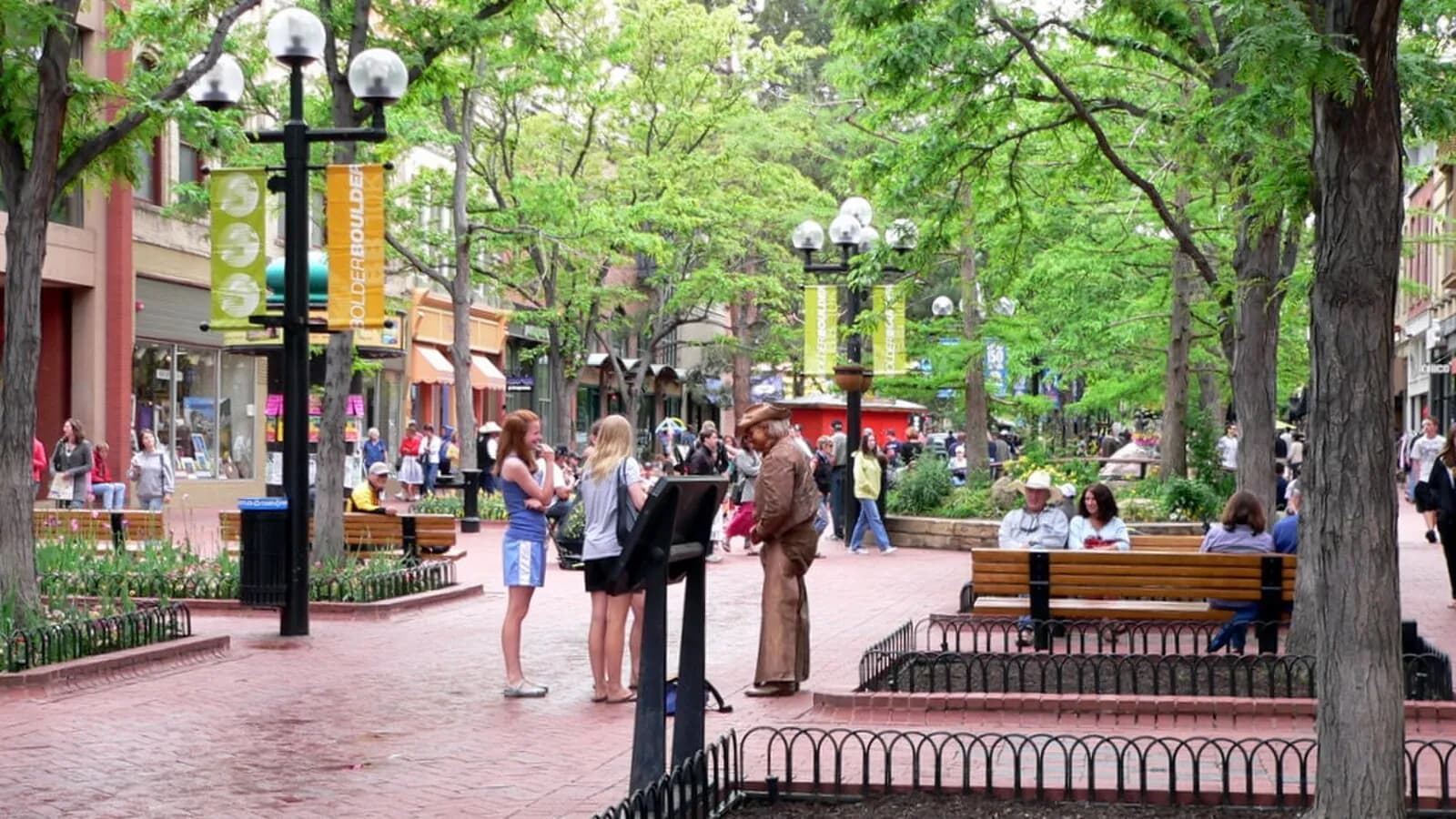
Boulder is a college town that outgrew the label. The University of Colorado brings 35,000 students every fall, and the town around it has a serious tech economy and a serious food scene. The Flatirons, five sandstone slabs, are visible from nearly every block, and protected open space surrounds the city on every side. Fort Collins is a college city with a brewing habit and a mountain range at the end of the street. It had about 170,000 residents at the 2020 census, but staying in or near Old Town makes it feel much smaller. Old Town went on the National Register of Historic Places in 1978, and the tourism office says it helped inspire Disneyland's Main Street. Read more in our Boulder guide and our Fort Collins guide.
Skiing and the mountains
Neither town is a ski resort. The Fort Collins guide says plainly that nobody comes here to ski out the door. What both offer is quick access to the foothills. Boulder sits at 5,430 feet where the plains meet the mountains, and its winters are mild by Colorado standards, with daytime highs averaging 45 degrees and south-facing trails that stay dry most of the winter. Rocky Mountain National Park is about an hour and a half away via Lyons. Fort Collins sits at about 5,000 feet. In winter, trails at Lory State Park stay open for hiking, snowshoeing and cross-country skiing. If skiing is the goal, look at our list of the best ski towns in Colorado.
Summer and the outdoors
Boulder's draw outdoors is the Flatirons trails, the Boulder Creek Path and Eldorado Canyon. Chautauqua parking fills early, so plan around it. The Boulder guide suggests the southern half of the Mesa Trail for fewer crowds, and a half-day guided climb in Eldorado Canyon through Colorado Mountain School costs $200. Fort Collins counts 285-plus miles of trails, many along the Poudre River and Spring Creek. Horsetooth, Lory State Park and the Poudre River fill the days, and rafting on the Poudre runs from May through August. Soapstone Prairie Natural Area, north of town, has more than 28 square miles of grassland and a bison herd. See things to do in Boulder, things to do in Fort Collins and our Boulder day trip guide.
Food and drink
Boulder has a serious food scene. Frasca Food and Wine is Michelin-starred, and the James Beard Foundation named it Outstanding Restaurant in 2025. Its Quattro Piatti menu is $150. Its sister restaurant, Pizzeria Alberico, serves a Margherita for $20. Sherpa's Adventure Restaurant has served Nepali, Indian and Tibetan food since 2002, and Avery Brewing has more than 30 rotating taps. Fort Collins is the beer town. The tourism office counts more than 20 craft breweries and says the city produces 70 percent of Colorado's craft beer. New Belgium and Odell both run busy taprooms, and CooperSmith's is the city's oldest brewpub. The Silver Grill Cafe has served breakfast since 1933, and Big Al's sells a burger for $7.79.
Where to stay
In Boulder, downtown near Pearl Street is the easiest base without a car, with historic and boutique hotels within a short walk. For trailheads, the cottages at Chautauqua sit at the foot of the Flatirons, and Fourmile Canyon puts you closer to climbing and riding. Graduation weekend in early May is the busiest lodging weekend of the year. In Fort Collins, Old Town puts you on foot near nearly everything, from The Elizabeth to the 1923 Armstrong and the 1904 Edwards House. South College suits anyone here for campus. Horsetooth Reservoir and the Poudre Canyon trade the city for campsites, cabins and a longer drive. Compare where to stay in Boulder, where to stay in Fort Collins, historic hotels and our guide to where to stay in Colorado.
Getting there and getting around
Boulder is 30 miles northwest of Denver, a 35 to 45 minute drive on Highway 36 outside rush hour. The Flatiron Flyer bus runs from Union Station to downtown Boulder in about 50 minutes for $5.25. From the airport, the A Line train and the Flyer take about two hours in total. The free Hop bus runs every 10 minutes during the day. Fort Collins is 60 miles north of Denver International Airport, and the tourism office puts both the airport and downtown Denver about 60 minutes away via I-25. Landline and Groome Transportation run airport shuttles. Transfort buses are currently fare-free, and the MAX line connects downtown, midtown and CSU. The Fort Collins guide lists Boulder at less than an hour away. For more road trip ideas, see our Colorado drives.
When to go
Boulder's guide calls September the best month, with temperatures in the mid-70s, dry trails and every restaurant open. May and June bring wildflowers on the lower trails, and July and August reach the low 90s in the afternoon. The Bolder Boulder 10K runs on Memorial Day, and the Colorado Shakespeare Festival runs in July and August. In Fort Collins, summer highs average 80 in June, 85 in July and 83 in August. Fall is the sweet spot for hiking, with September averaging 75 and 45. The First Friday Art Walk is free on the first Friday of each month, and Garden of Lights runs December 11 to 27 in 2026. See our Colorado events calendar for more dates.
Which one to pick
Pick Boulder if you want trails right at the edge of town, the Flatirons above you and a food scene that includes a Michelin-starred room. It is the closer of the two to Denver, at 30 miles, and its free Hop bus covers the core. Pick Fort Collins if you want a walkable historic Old Town, a city built around craft beer and days on the Poudre River or at Horsetooth. Both sit low by Colorado standards, at about 5,000 and 5,430 feet, and both work without a car. Since the Fort Collins guide puts Boulder less than an hour away, you can also see both on one trip. For more ideas around the state, see things to do in Colorado.