
The feel of each town
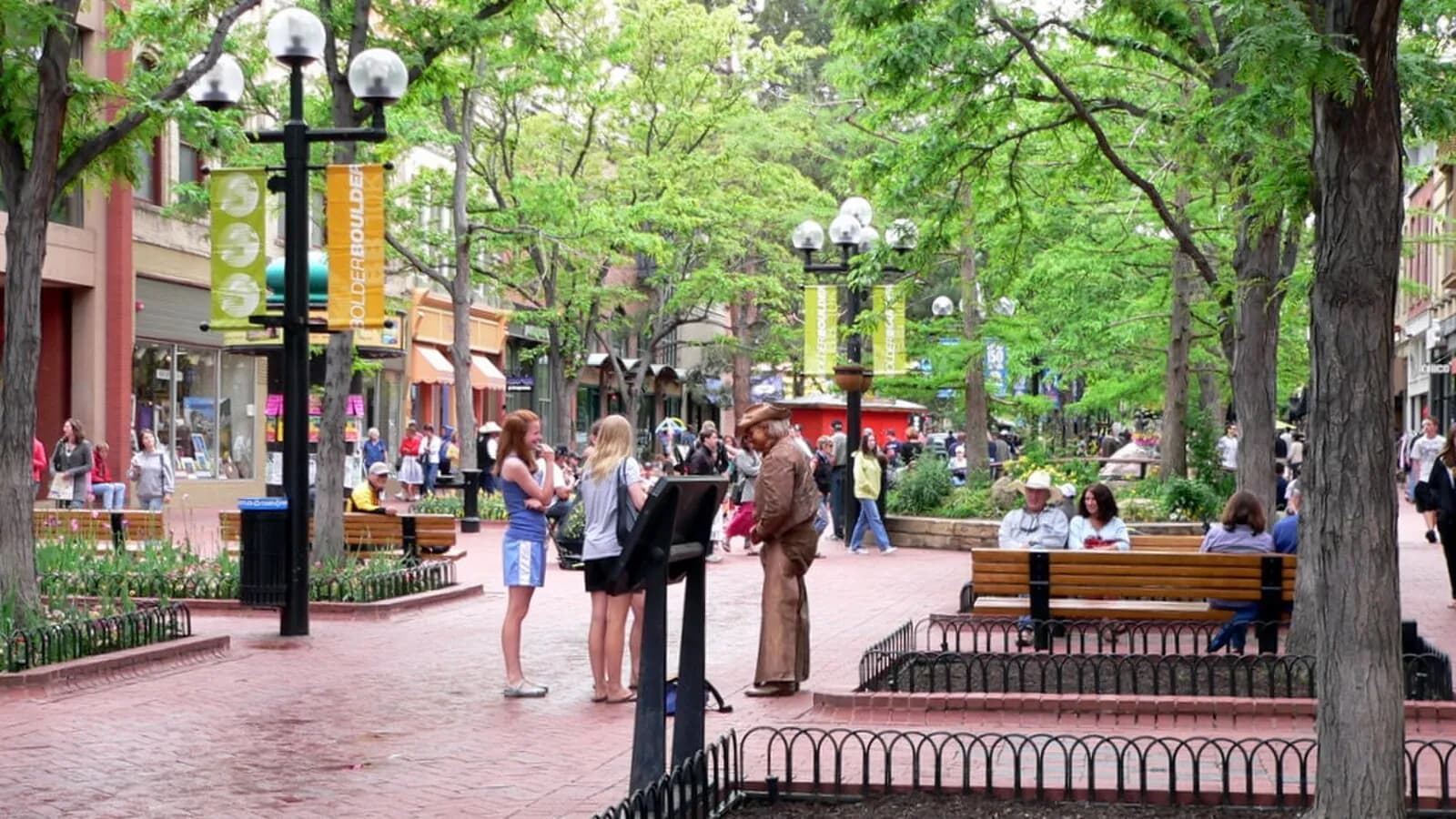
Boulder is a college town that outgrew the label. The University of Colorado brings 35,000 students every fall, and the Flatirons, five sandstone slabs above town, are visible from nearly every block. Open space surrounds the city on every side, protected by a growth boundary that voters have reaffirmed. Boulder was settled in 1858 by gold prospectors who never found much gold. Denver was founded the same year, in November 1858, as a supply post for the Pike's Peak Gold Rush. Its guide describes a Western city with a blue-collar backbone that has added tech money, craft everything and a genuine arts scene without losing its ranching roots. You will see cowboy boots and Patagonia vests on the same block. Read our Boulder guide and our Denver guide.
Skiing and the mountains
Neither is a ski town, but both sit at the foot of the Rockies. Boulder sits at 5,430 feet where the plains meet the mountains, and its winters are mild by Colorado standards, with daytime highs averaging 45 degrees and snow that usually melts within 48 hours. Rocky Mountain National Park is about an hour and a half away via Lyons. Denver sits at exactly 5,280 feet and is the hub for mountain trips, with I-70 running west to the ski areas. Its guide says ski day trips are easy if you leave early: a 6 AM departure gets you to Keystone before the rush, while anything after 7 turns into a two-and-a-half-hour slog. See the best ski towns in Colorado and our Denver to the mountains road trips.
Summer and the outdoors
Boulder's trails start at the edge of town. The Flatirons trails, the Boulder Creek Path and Eldorado Canyon are the big draws, and the guide picks the southern half of the Mesa Trail as the best walk. Chautauqua parking fills early, so plan around it. July and August bring afternoon highs in the low 90s and thunderstorms that build by 3 PM. Denver's outdoors take a short drive. Red Rocks works for a morning walk or a show, and the guide suggests renting a car for the days you go to Red Rocks or Mount Blue Sky. Rocky Mountain National Park and Mount Blue Sky have used timed reservations, so check the rules first. In town, City Park at sunset is the classic free view. See things to do in Boulder, things to do in Denver and the best hikes near Denver.
Food and drink
Boulder has a serious food scene. Frasca Food and Wine is Michelin-starred, and the James Beard Foundation named it Outstanding Restaurant in 2025. Its Quattro Piatti menu is $150. Sherpa's has served Nepali, Indian and Tibetan food since September 2002, and Avery Brewing has brewed since September 1993. Denver's picks are spread across neighborhoods. Beckon is a Michelin-starred chef's counter in RiNo that seats 18, and Annette in Aurora is a James Beard Award winner. My Brother's Bar says it has served drinks since 1873, and Sushi Den has served sushi since 1984. Tavernetta is the Italian restaurant from Frasca Hospitality Group, and Federal Boulevard is a food street many visitors never find. Read our guide to where to eat in Denver.
Where to stay
In Boulder, downtown near Pearl Street is the easiest base without a car, with historic and boutique hotels within a short walk. For trailheads, the cottages at Chautauqua sit at the foot of the Flatirons, and Fourmile Canyon puts you closer to climbing and riding. Graduation weekend in early May is the busiest lodging weekend of the year. In Denver, downtown and LoDo put you near Union Station and the theaters. RiNo has newer hotels near breweries and murals, and Cherry Creek suits shoppers. If you would rather skip a rental car, downtown is the easiest base. Compare where to stay in Boulder, where to stay in Denver, historic hotels and our guide to where to stay in Colorado.
Getting there and getting around
Denver International Airport sits 25 miles northeast of downtown Denver, and the A Line train runs from the airport to Union Station. Taxis and rideshares run $45 to $65. Downtown Denver is walkable, the light rail covers most of the metro area, and downtown parking costs $25 to $40 per day. Boulder is 30 miles northwest of Denver, a 35 to 45 minute drive on Highway 36 outside rush hour. The Flatiron Flyer bus runs from Union Station to downtown Boulder in about 50 minutes for $5.25 one way. From the airport, the A Line and the Flyer together take about two hours. In Boulder, the free Hop bus links Pearl Street, the Twenty Ninth Street shopping district and the CU campus every 10 minutes during the day. See our Denver weekend drive.
When to go
Boulder's guide calls September the best month, with temperatures in the mid-70s, dry trails and every restaurant open. May and June bring wildflowers on the lower trails, and October is underrated, with golden light and lower lodging rates. The Bolder Boulder 10K runs on Memorial Day, and the Colorado Shakespeare Festival runs in July and August. Denver's guide points to September and October and calls the last week of September the best single week, with days around 75 and patio season still going. The National Western Stock Show runs the middle two weeks of January, and the Great American Beer Festival runs the first weekend of October. Denver's guide suggests avoiding that week unless you want to fight for a barstool. Check our Colorado events calendar.
Which one to pick
Pick Boulder if you want trails that start at the edge of town, a walkable downtown on Pearl Street and a smaller place with a serious food scene. It sits at 5,430 feet, and the free Hop bus covers the core. Pick Denver if you want a big city base with neighborhoods to explore, restaurants, museums, Red Rocks and sports, plus the airport train and highway links to the rest of the state. It sits at exactly 5,280 feet. The two are 30 miles apart, and the Flatiron Flyer links them, so it is easy to stay in one and visit the other. For a weekend plan, read our Denver weekend guide, our Boulder day trip and Boulder vs Fort Collins, or see things to do in Colorado.