
The feel of each town
Colorado Springs is a real city with a mountain in its front yard. General William Jackson Palmer planned it, and it became a city in 1871. Colorado City, settled in 1859, was the rowdier town next door, and its old stretch of Colorado Avenue is now a historic district. The Broadmoor opened on June 29, 1918. Glenwood Springs sits where the Roaring Fork meets the Colorado River, right off I-70. The Ute people used the hot springs long before settlement, and the town was founded in 1883 under the name Defiance. The Hotel Colorado was built in 1893, and Doc Holliday died here in 1887. It is a working community of 10,000 year-round residents, and its guide says plainly that it is not a resort. Read our Colorado Springs guide and our Glenwood Springs guide.
Skiing and the mountains
Neither is a big ski town. Colorado Springs treats Pikes Peak, a 14,115 foot summit you can drive or ride a train to, as a local attraction. The highway stays open year-round, weather permitting, and closes on Thanksgiving and Christmas Day. The guide suggests driving straight to the summit first and stopping on the way down, since weather changes quickly. Glenwood Springs has Sunlight Mountain Resort, a 20-minute drive, with 749 acres, 77 runs and 2,010 feet of vertical. Its guide calls a weekday in January there the way ski areas used to feel, and suggests bringing your own lunch. The hot springs steam against cold air all winter, so a ski day can end in the pools. See the best ski towns in Colorado and our guide to Colorado hot springs in winter.
Summer and the outdoors
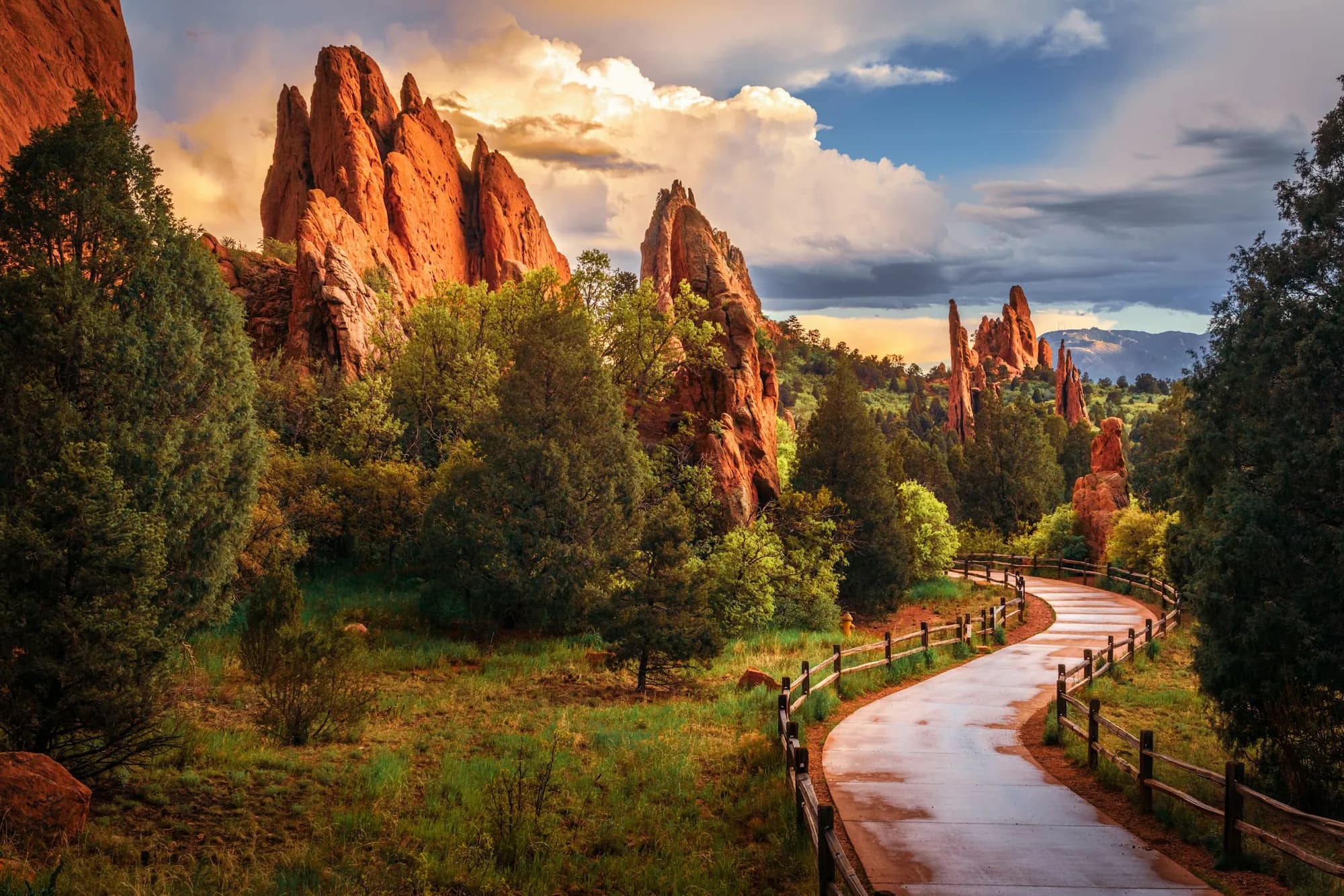
The Colorado Springs guide calls its free sights the best argument for coming. Garden of the Gods covers 1,367 acres of red rock and has stayed free since 1909, and in summer a free shuttle runs from Rock Ledge Ranch. The Manitou Incline gains 2,000 feet in less than a mile over 2,768 steps and needs a free online reservation. Glenwood Springs pairs canyon adventure with rest. You can raft a Class III rapid in the morning and soak in 104-degree mineral water by the afternoon. Rafting is at its best in June, the paved canyon trail fills with cyclists in summer, and Hanging Lake needs a timed permit all year. See things to do in Colorado Springs, things to do in Glenwood Springs and the best hot springs in Colorado.
Food and drink
Colorado Springs has a formal dinner in The Penrose Room at The Broadmoor, where a jacket is required for men and Beef Wellington is the signature. Four by Brother Luck serves a four-course tasting menu rooted in the Four Corners for $85, and The Peppertree has been a fine dining address since 1983. Edelweiss has filled an old schoolhouse since 1967, and Phantom Canyon Brewing is the easy downtown choice. Glenwood Springs keeps it downtown. Riviera Supper Club serves seasonal scratch food on Grand Avenue, The Pullman lists elk bolognese at $29, and Juicy Lucy's Steakhouse serves a 12 oz New York strip for $48. Glenwood Canyon Brewpub brews Hanging Lake Ale, and Doc Holliday's Saloon leans into the old West theme.
Where to stay
In Colorado Springs, downtown puts you within walking distance of Tejon Street, with history at The Antlers and The Mining Exchange and a more casual base at Kinship Landing. Near Old Colorado City and Garden of the Gods, bed and breakfasts and a bicycle-themed motor lodge offer more character. The Broadmoor is its own world in the foothills. In Glenwood Springs, most lodging sits within a few blocks of the hot springs and the Amtrak station, along Pine Street, 6th Street and 7th Street. Hotels in West Glenwood trade the walk for easier parking, and a few cabins sit out in Glenwood Canyon. Compare where to stay in Colorado Springs, where to stay in Glenwood Springs, hot springs hotels and our guide to where to stay in Colorado.
Getting there and getting around
Colorado Springs is 70 miles south of Denver on Interstate 25, about 1 hour 15 minutes of driving. Colorado Springs Airport is 12 miles from downtown, with on-site car rentals and low-cost parking. Sights are spread out, so rent a car if you plan to see more than downtown, where the free ZEB shuttle runs every 7 to 10 minutes. Glenwood Springs is 160 miles west of Denver on I-70, two and a half to three hours through the Eisenhower Tunnel and Glenwood Canyon, which can close for rockfall or weather. Amtrak's California Zephyr stops daily, about five and a half hours from Denver's Union Station. Eagle County Regional Airport is 60 miles east, and the RFTA bus runs to Aspen roughly every 30 minutes for $9 one way. See our Colorado drives.
When to go
Colorado Springs works all year, and its tourism office reports an average of 300 days of sun. Fall is the sweet spot, with September averaging a high of 74 and October 63. Summer is the peak, with July highs around 84, crowds and advance reservations for the zoo and the Incline. January averages a high of 42. Glenwood Springs also works in every season. Its guide calls October the best single month, when the canyon cottonwoods turn yellow in the last two weeks. Winter brings snow falling into the pools and hotel rates that drop 30 to 50 percent. July and August are the busiest, and the week between Christmas and New Year fills the pool. Strawberry Days runs in mid-June. Check our Colorado events calendar.
Which one to pick
Pick Colorado Springs if you want red rock and a big peak close at hand, with free Garden of the Gods, a drive or train ride up Pikes Peak and a grand historic resort in The Broadmoor. Plan on a car, since its sights are spread out. Pick Glenwood Springs if you want hot springs, rafting and a canyon trail, in a town where most lodging sits a few blocks from the pools and Amtrak stops daily. It also makes a base for Aspen by bus. For more ideas, see things to do in Colorado, Colorado Springs vs Denver and Glenwood Springs vs Ouray.