
The feel of each town
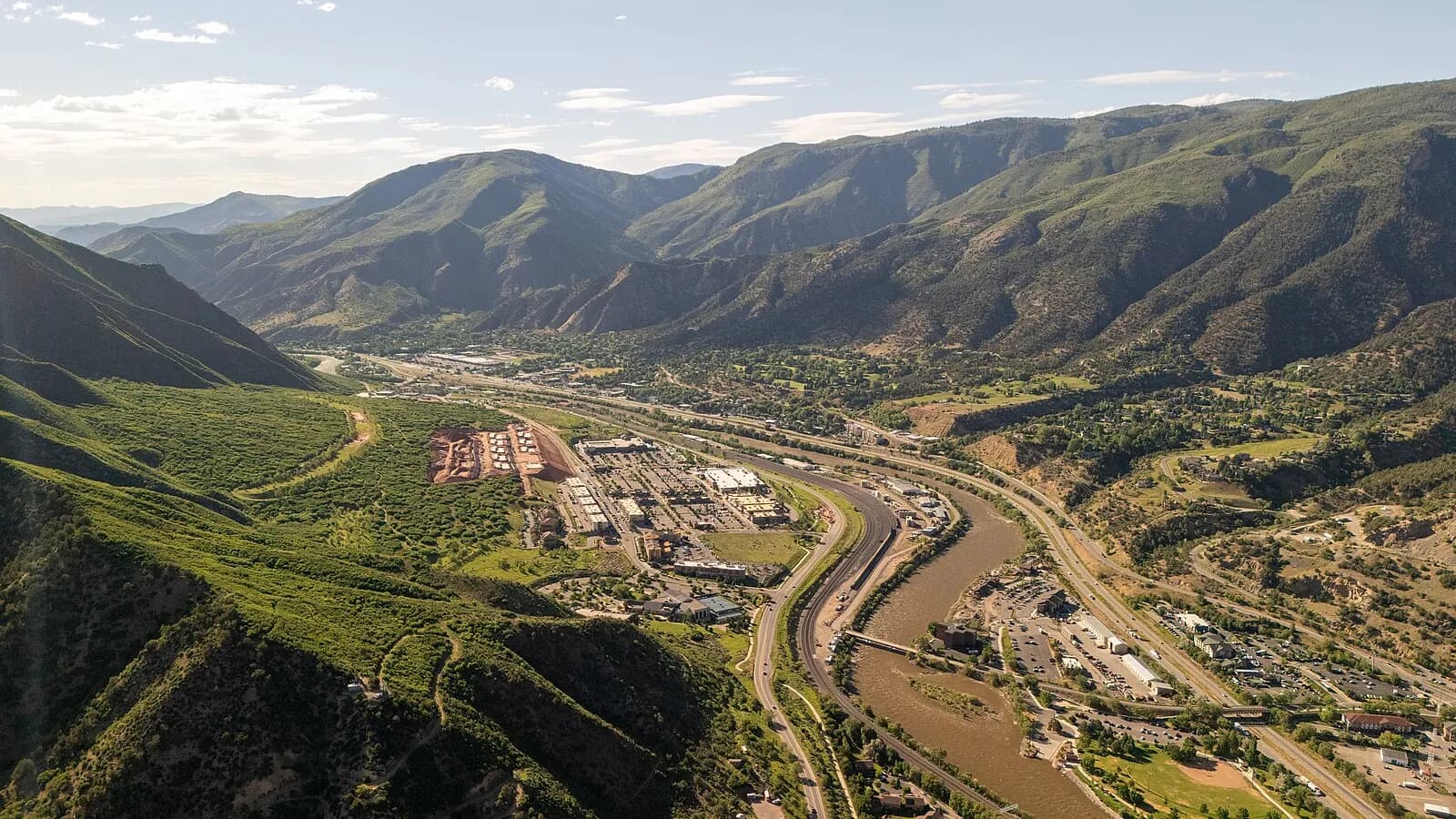
Glenwood Springs sits where the Roaring Fork meets the Colorado River, right off I-70. It was founded in 1883 as Defiance, the Hotel Colorado was built in 1893, and Doc Holliday died there in 1887. It is a working town of 10,000 year-round residents, with a regional hospital and a community college campus, and its guide says plainly that it is not a resort. Vail was built to ski. It has no mining past and no main street in the traditional sense. Pete Seibert and Earl Eaton saw the back bowls in 1957, and the first lift ran on December 15, 1962. The village was modeled on Bavarian ski towns and is pedestrian-only. About 5,500 people live there year-round, and the town swells to 35,000 on a busy ski day. Read our Glenwood Springs guide and our Vail guide.
Skiing and the mountains
Vail's draw is the back bowls. They top out at 11,570 feet on Wildcat Ridge, and Blue Sky Basin tops out around 11,250 feet. The mountain opens the front side first and adds the back bowls and Blue Sky Basin as snow builds. On a powder morning, the Vail guide suggests the Eagle Bahn Gondola in Lionshead, where the line is consistently shorter. Glenwood Springs has Sunlight Mountain Resort, a 20-minute drive away, with 749 acres, 77 runs and 2,010 feet of vertical. Its guide calls it the way ski areas used to feel and suggests bringing your own lunch. Glenwood's other winter draw is the hot springs, where snow falls into the mineral pools. Near Vail, the Westin Riverfront in Avon sells a pool and spa day pass for around $50. See the best ski towns in Colorado and Colorado hot springs in winter.
Summer and the outdoors
Glenwood Springs suits rafters and riders. Rafting is at its best in June, when the water is highest, and cyclists ride the paved Glenwood Canyon trail. The Hanging Lake trail needs a timed permit all year. Its guide says you can raft a Class III rapid in the morning and soak in 104-degree mineral water by two in the afternoon, and Iron Mountain Hot Springs has 35 riverside pools. In Vail, summer runs from mid-June through early October. You can hike from East Vail, take the Eagle Bahn Gondola up to Epic Discovery, or catch a concert at the Ford Amphitheater. July is peak season, with the Bravo festival and the Vail Dance Festival, and the GoPro Mountain Games come to town in early June. See things to do in Glenwood Springs and things to do in Vail.
Food and drink
Glenwood Springs keeps many of its restaurants on Seventh Street and Grand Avenue. The Pullman has 80 seats plus 12 at the bar, and its Colorado wagyu burger is $25. Juicy Lucy's Steakhouse lists a 12 oz New York strip at $48 in a late-1800s building. Glenwood Canyon Brewpub pours its own Hanging Lake Ale, and Doc Holliday's Saloon is open seven days a week. Vail leans toward fine dining. Sweet Basil has anchored Vail Village since 1977, when it opened as a 47-seat room. At La Tour, the pan-roasted duck breast is $55, and Matsuhisa Vail has been open since 2011. The Red Lion opened in February 1963 and is an apres-ski staple. For a cheap bite, Vendetta's sells a cheese slice for $4. Several Vail restaurants close between seasons, so check before a shoulder-season trip.
Where to stay
In Glenwood Springs, most lodging sits within a few blocks of the hot springs and the Amtrak station, along Pine Street, 6th Street and 7th Street. Hotels near Two Rivers Plaza and Wulfsohn Road in West Glenwood trade the walk for easier parking, and a few cabins sit out in Glenwood Canyon. In Vail, Vail Village and Lionshead are the two main bases, and both put you near a gondola. Hotels farther out on the Frontage Road and in West Vail trade the village scene for easier driving, and the free town bus connects them. Lodging rates in Vail hit their annual low from October through mid-November. Compare where to stay in Glenwood Springs, where to stay in Vail, hot springs hotels and our guide to where to stay in Colorado.
Getting there and getting around
Vail is 100 miles west of Denver on I-70, about two hours without traffic. On ski-season Friday afternoons and Saturday mornings, the drive can stretch to four hours or more, so leave Denver before 7 AM or after 2 PM on Fridays. Eagle County Regional Airport is 35 miles west, with shuttles to Vail for about $50 each way. Free buses link Vail Village, Lionshead, West Vail, East Vail and Cascade Village. Glenwood Springs is 160 miles west of Denver on I-70, two and a half to three hours by car. Amtrak's California Zephyr stops daily, about five and a half hours from Denver's Union Station. Eagle County Regional is 60 miles east of Glenwood, and the RFTA bus runs to Aspen for $9 one way. When rockfall closes Glenwood Canyon, the detour adds two to four hours. See our Colorado drives.
When to go
In Vail, late January through February brings the most reliable storm cycles. The first two weeks of December are a sweet spot, with shorter lines and holiday rates not yet in effect. Avoid Presidents Day weekend, when lift lines push 45 minutes, and the week between Christmas and New Year. Golden aspens arrive from the second week of September through month end. Glenwood Springs works in every season. Its guide calls October the best single month, with yellow cottonwoods in the canyon in the last two weeks. Rafting peaks in June, and winter hotel rates drop 30 to 50 percent. Avoid the week between Christmas and New Year, when the pool reaches capacity most days. See our fall colors guide and our Colorado events calendar.
Which one to pick
Pick Glenwood Springs if you want hot springs and the river, with rafting in June, an Amtrak station and a low elevation of 5,746 feet. It is a working town where gas runs 10 to 20 cents per gallon below Vail, and Sunlight covers a simple ski day. Pick Vail if the back bowls are the reason for your trip, or if you like a planned, pedestrian-only village with a long fine dining tradition. It is the shorter drive from Denver, at 100 miles, and its village sits at 8,150 feet. Both towns work without a car once you arrive. For more pairings, see Glenwood Springs vs Ouray and Breckenridge vs Vail, or browse things to do in Colorado.