
The feel of each town
Colorado Springs is a real city with a mountain in its front yard. General William Jackson Palmer planned it, and it became a city in 1871. Colorado City, settled in 1859, was the rowdier town next door, and its old stretch of Colorado Avenue is now a historic district. The Broadmoor opened on June 29, 1918. Fort Collins is a college city with a brewing habit and a mountain range at the end of the street. It grew from Camp Collins, built in 1862, and Colorado State University took its current name in 1957. Old Town went on the National Register of Historic Places in 1978, and the tourism office says it helped inspire Disneyland's Main Street. Fort Collins had about 170,000 residents at the 2020 census, but Old Town feels much smaller. Read our Colorado Springs guide and our Fort Collins guide.
Skiing and the mountains
Neither city is a ski town. Colorado Springs treats Pikes Peak, a 14,115 foot summit you can drive or ride a train to, as a local attraction. The highway stays open year-round, weather permitting, and closes on Thanksgiving and Christmas Day. The guide suggests driving straight to the summit first and stopping on the way down, and the summit cafe sells the well-known high-altitude donuts. Fort Collins says plainly that nobody comes here to ski out the door. Its mountains are close but not in town. In winter, the trails at Lory State Park stay open for hiking, snowshoeing and cross-country skiing, and the tourism office lists Rocky Mountain National Park and Estes Park at less than an hour. See the best ski towns in Colorado and our Colorado winter road trips.
Summer and the outdoors
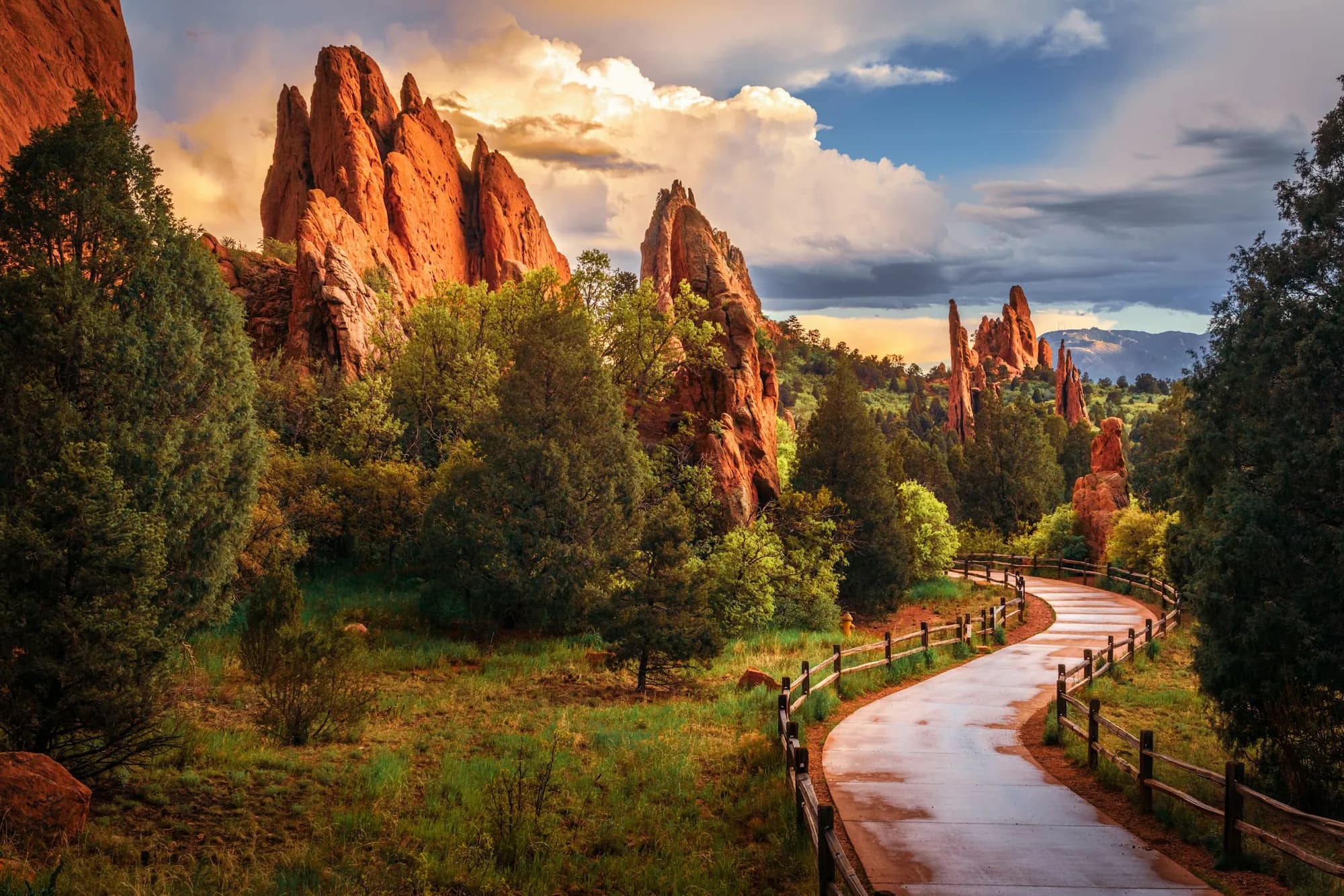
The Colorado Springs guide calls its free sights the best argument for coming. Garden of the Gods covers 1,367 acres of red rock and has stayed free since 1909, and in summer a free shuttle runs from Rock Ledge Ranch. The Manitou Incline gains 2,000 feet in less than a mile over 2,768 steps and needs a free online reservation. Fort Collins fills its days with Horsetooth, Lory State Park and the Poudre River. Rafting on the Poudre runs from May through August, and the tourism office counts 285-plus miles of trails. Soapstone Prairie Natural Area, north of town, covers more than 28 square miles of grassland. July averages a high of 84 in Colorado Springs and 85 in Fort Collins. See things to do in Colorado Springs, things to do in Fort Collins and our Colorado camping guide.
Food and drink
Colorado Springs has a formal dinner in The Penrose Room at The Broadmoor, where a jacket is required for men and Beef Wellington is the signature. Four by Brother Luck serves a four-course tasting menu rooted in the Four Corners for $85, and The Peppertree has been a fine dining address since 1983. Phantom Canyon Brewing is the easy downtown choice. Fort Collins is known for beer. The tourism office counts more than 20 craft breweries and says the city produces 70 percent of Colorado's craft beer. New Belgium, founded in 1991, offers a free 45-minute tour, and Odell, founded in 1989, is known for its patio. The tourism office calls CooperSmith's the city's oldest brewpub, and the Silver Grill Cafe has been open since 1933. Ginger and Baker fills a historic grain mill.
Where to stay
In Colorado Springs, downtown puts you within walking distance of Tejon Street, with history at The Antlers and The Mining Exchange and a more casual base at Kinship Landing. Near Old Colorado City and Garden of the Gods, bed and breakfasts and a bicycle-themed motor lodge offer more character. The Broadmoor is its own world in the foothills. In Fort Collins, Old Town puts you on foot near nearly everything, from The Elizabeth to the 1923 Armstrong and the 1904 Edwards House. South College suits anyone here for campus, and Horsetooth Reservoir and the Poudre Canyon trade the city for campsites and cabins. Compare where to stay in Colorado Springs, where to stay in Fort Collins, historic hotels and our guide to where to stay in Colorado.
Getting there and getting around
Colorado Springs is 70 miles south of Denver on Interstate 25, about 1 hour 15 minutes of driving. Colorado Springs Airport is 12 miles from downtown, with on-site car rentals and low-cost parking. Sights are spread across the city and into Manitou Springs, so rent a car if you plan to see more than downtown, where the free ZEB shuttle runs every 7 to 10 minutes. Fort Collins is 60 miles north of Denver International Airport, and the tourism office puts both the airport and downtown Denver about 60 minutes away by car on I-25. Without a car, Landline and Groome Transportation run airport shuttles. In town, Transfort buses are currently fare-free, the MAX line connects downtown, midtown and CSU, and bikes are the classic way around. See our Colorado drives.
When to go
Colorado Springs works all year, and its tourism office reports an average of 300 days of sun. Fall is the sweet spot, with September averaging a high of 74 and October 63. Summer is the peak, with crowds and advance reservations for the zoo and the Incline, and January averages a high of 42. Fort Collins's tourism office also claims 300 days of sunshine. Summer is its prime time for the outdoors, with June averaging 80 and July 85. September averages 75 and 45, and October 64 and 34. Winter is colder than the sunshine suggests, with January averaging 40 and 13. The First Friday Art Walk runs each month, and Garden of Lights runs December 11 to 27 in 2026. Check our Colorado events calendar.
Which one to pick
Pick Colorado Springs if you want red rock and a big peak close at hand, with free Garden of the Gods, a drive or train ride up Pikes Peak and a grand historic resort in The Broadmoor. Plan on a car, since its sights are spread out. Pick Fort Collins if you want to walk a real downtown, drink very good beer and still be on a trail or a river within minutes, without renting a car. Both cities sit on I-25, on either side of Denver, so a Front Range trip can include each. For more ideas, see things to do in Colorado, Denver vs Fort Collins and Colorado Springs vs Denver.