
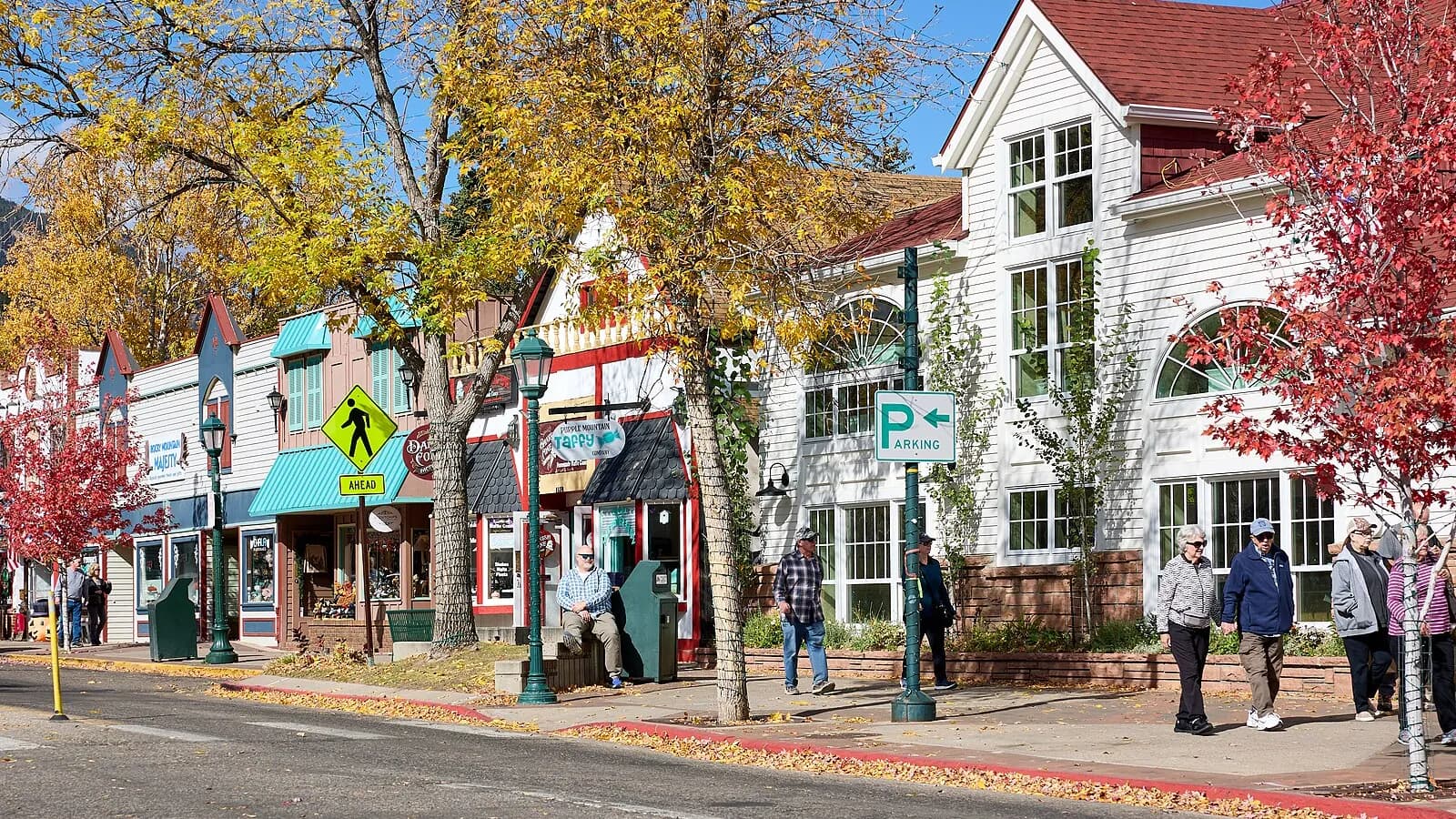
The feel of each town
Estes Park is the front door to Rocky Mountain National Park, and the park brings four million visitors a year to its doorstep. Elk walk through the downtown parking lots. Joel Estes built a cabin in the valley in 1859, and the park was designated in 1915. The Stanley Hotel, built in 1909, sits on a hill above town, and Stephen King wrote The Shining after staying there in 1974. About 6,000 people live in town year-round. Winter Park began as a business plan. On April 20, 1932, Doc and Helen Graves built 10 small tourist cabins and called the place Hideaway Park, and the village took the name Winter Park in 1978. Its downtown runs along US Highway 40 rather than around a historic square, and the resort base sits about three miles away. Read more in our Estes Park guide and our Winter Park guide.
Skiing and the mountains
The two towns face the mountains in different ways. In Estes Park, the mountains are the park. Longs Peak, at 14,259 feet, dominates the southern skyline, and its summit is a 15-mile round trip that takes most fit hikers 12 to 15 hours. In winter, the park stays open, the east side trails work for snowshoeing, and Hidden Valley has a sledding hill and a small skiing area for lessons. Winter Park is a ski town first. Its mountain has run since January 28, 1940, with 3,081 skiable acres and 23 lifts, a 9,000 foot base and a 12,060 foot summit. It reports more than 344 inches of snow in an average year, and just 8 percent of the terrain is rated beginner. Mary Jane, known for bumps and trees, has its own base. See the best ski towns in Colorado.
Summer and the outdoors
Most of Estes Park's summer is inside Rocky Mountain National Park: Bear Lake Road, the Glacier Gorge trails, the Moraine Park meadows and Trail Ridge Road, which tops out at 12,183 feet. In town, there is the Riverwalk and the Lake Estes Trail. The guide suggests the west side of the park for fewer crowds, including a 3.1 mile hike to Lulu City. Afternoon storms build fast in July and August, so be below treeline by noon on any high peak. In Winter Park, Trestle Bike Park runs more than 40 miles of lift-serviced downhill trails, and the resort counts over 600 miles of trails across the Winter Park and Fraser area. Events and live music fill Hideaway Park downtown, with summer days in the 60s and 70s. See things to do in Estes Park and things to do in Winter Park.
Food and drink
Estes Park keeps dinner relaxed. Bird & Jim has been a dining room since 2016, and its wine list has earned a Wine Spectator Award of Excellence every year since 2020. Smokin' Dave's BBQ serves slow-smoked platters, with Dave's Single at $18. The Rock Inn Mountain Tavern sits in a building dating to 1937, with live music and views of the Continental Divide, and The Egg of Estes opens at 6 AM for breakfast. In Winter Park, Tabernash Tavern, north of town, is the fine dining choice in the valley, with an 8 oz filet mignon at $60. Deno Kutrumbos bought Deno's Mountain Bistro in 1976, Hernando's Pizza Pub has made pizza since 1967, and Rudi's Deli is the cheap, fast lunch. Some Winter Park restaurants add charges to the bill, so ask before you tip.
Where to stay
In Estes Park, most lodging sits in one of four places: downtown and near the Stanley Hotel, around Lake Estes, along Fall River Road toward the park entrance, or south of town toward Longs Peak. The Fall River Road lodges are the closest to the park's Fall River entrance, which helps for early starts. In Winter Park, slopeside condos sit at the resort base, while downtown hotels and small lodges put you near restaurants and on the free bus. Downtown also puts you close to summer events and live music in Hideaway Park. Ranches up the valley trade convenience for space and activities on site. The base and downtown are about three miles apart. Compare where to stay in Estes Park, where to stay in Winter Park and our guide to where to stay in Colorado.
Getting there and getting around
Estes Park is 71 miles northwest of Denver, about 90 minutes via I-25 north to US-36 west through Boulder and Lyons. Highway 34 through Big Thompson Canyon and Highway 7, the Peak to Peak Highway, are the alternates. The Estes Park Shuttle runs scheduled service from Denver International for about $55 each way, by reservation. The resort lists Winter Park as a 75-mile drive from the Denver metro area via I-70 and US Highway 40, crossing Berthoud Pass at 11,307 feet. In ski season, the Winter Park Express train runs from Denver Union Station to the base, with fares starting at $19. Once there, Estes Park has a free in-town trolley in summer and the park's Park and Ride shuttle, and Winter Park has The Lift, a free bus serving Winter Park, Fraser and Granby. For more road trips, see our Colorado drives.
When to go
Estes Park's guide points to late September for the elk rut and fall color, with aspens peaking around September 25 to October 5 in most years. Mid-June brings Trail Ridge Road and early wildflowers. Avoid July and August weekends, when the town fills to capacity. Winter is quiet, and hotel rates drop 40 to 60 percent. Trail Ridge Road closes by mid-October and reopens in late May. In Winter Park, winter is the main event. Last season, the Winter Park side ran from October 31, 2025 to April 19, 2026, while Mary Jane ran from January 9 to March 28, 2026. The Torchlight Parade is on December 24, 2026, and summer 2026 at the resort ran from June 19 to September 27. Check our Colorado events calendar before you book.
Which one to pick
Pick Estes Park if Rocky Mountain National Park is the heart of your trip, with elk in town, Longs Peak on the skyline and the Stanley Hotel above Elkhorn Avenue. Its guide favors mid-June and late September, and suggests a car and an early start for park entry. Pick Winter Park if skiing is the goal, or if you want steep terrain, the bumps at Mary Jane, a ski train from Union Station and a big downhill bike park in summer. Estes Park sits at 7,522 feet and Winter Park at 9,000 feet. For more park town matches, see Boulder vs Estes Park, or browse things to do in Colorado.