
The feel of each town
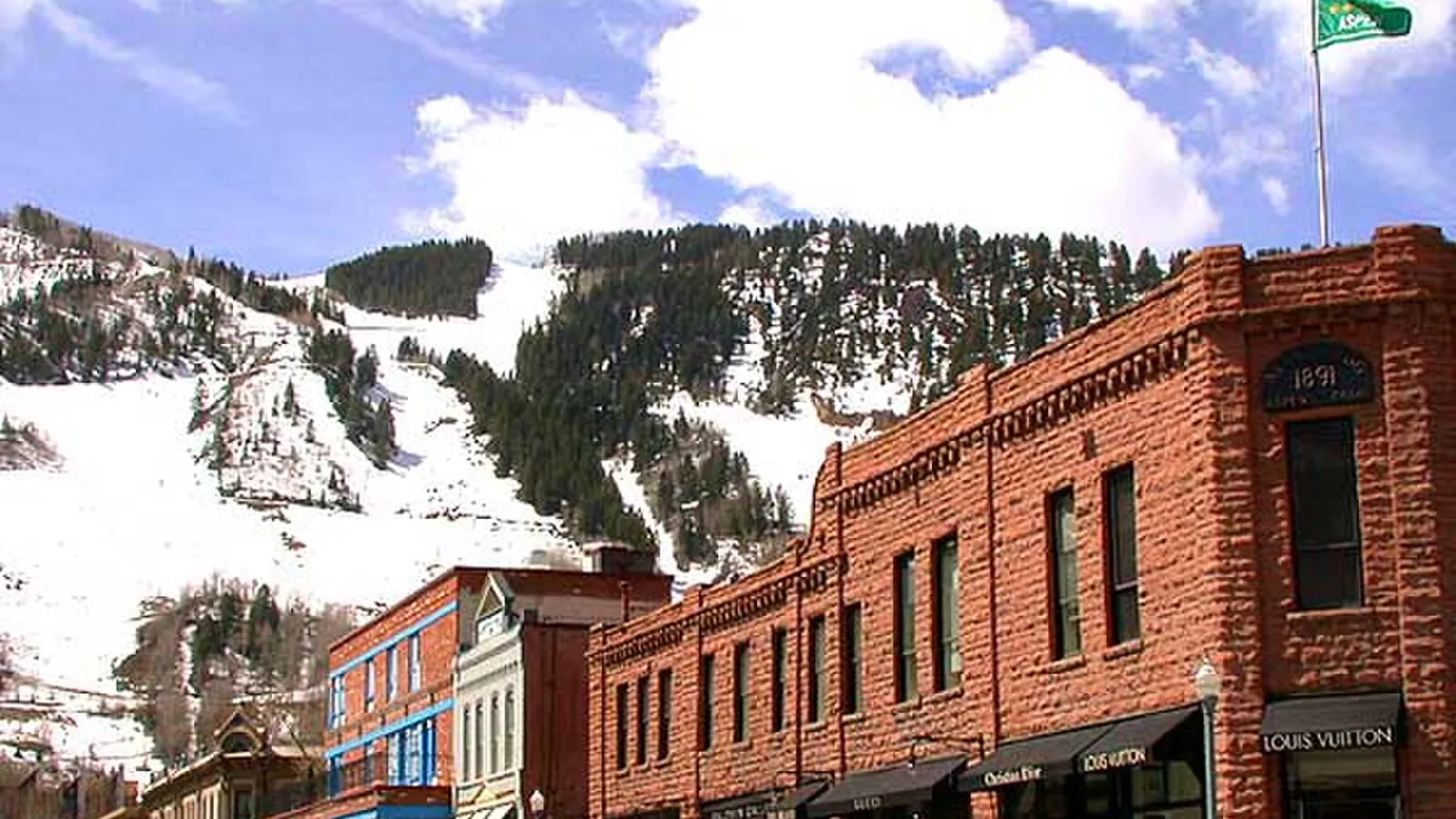
Aspen was a silver camp before anything else. Prospectors crossed Independence Pass in 1879, and Jerome B. Wheeler built the Hotel Jerome and the Wheeler Opera House in the 1880s. Both still stand. After the silver boom ended, Walter Paepcke arrived in 1945 and created the Aspen Institute and the Aspen Music Festival. The year-round population is 7,400, and the guide calls the wealth visible, alongside real investment in culture and public land. Estes Park is the front door to Rocky Mountain National Park, and elk walk through the downtown parking lots. About 6,000 people live there year-round, and the park brings four million visitors a year. Its guide describes a visitor mix that is less curated than a ski town, from families on road trips to climbers heading for Longs Peak. Read our Aspen guide and our Estes Park guide.
Skiing and the mountains
Aspen is the ski town of the pair. You choose among four mountains: Aspen Mountain, Aspen Highlands, Buttermilk and Snowmass. The mountain averages 300 inches a year, concentrated January through March, and the free bus to Snowmass takes 20 minutes. The Aspen guide notes that Snowmass has better intermediate terrain and shorter lift lines than Aspen Mountain. Estes Park's mountains are about the national park. Longs Peak, the northernmost fourteener in the state at 14,259 feet, dominates the southern skyline, and Trail Ridge Road tops out at 12,183 feet. In winter, the park stays open, the east side trails work for snowshoeing, and Hidden Valley has a sledding hill and a small skiing area for lessons. See the best ski towns in Colorado, ski-in ski-out hotels and Aspen vs Vail.
Summer and the outdoors
Aspen's guide calls summer underrated. Late June through August brings the Aspen Music Festival, warm days, cool nights and wildflowers at higher elevations. The Maroon Bells are the big draw, and in season you need a reservation to get there. Independence Pass, open Memorial Day weekend through mid-October, crosses the Continental Divide at 12,095 feet, and Smuggler Mountain Road gains 1,000 feet in two miles for a view over the valley. In Estes Park, most of the outdoors is inside Rocky Mountain National Park: Bear Lake Road, the Glacier Gorge trails, the Moraine Park meadows and Trail Ridge Road in season. The Bear Lake corridor fills by 6 AM on summer weekends, so use the Park and Ride shuttle. The park has used timed entry reservations, so check its site. See things to do in Aspen and things to do in Estes Park.
Food and drink
Aspen has the longer restaurant list. Matsuhisa opened in 1998 in a Main Street Victorian, and its eight-course omakase is $195 per person. Bosq says it earned Aspen's first Michelin star, with a five-course tasting at $215. Cache Cache has been in town since 1987, Paradise Bakery has baked from scratch since 1976, and Pine Creek Cookhouse sits at 9,750 feet, reached in winter by ski, snowshoe or sleigh. Many Aspen restaurants close between seasons. In Estes Park, Bird & Jim has served a seasonal menu since 2016, and its wine list has earned a Wine Spectator Award of Excellence every year since 2020. At Smokin' Dave's BBQ, the Dave's Single platter is $18, and The Rock Inn Mountain Tavern, in a building dating to 1937, hosts live music. Many Estes Park shops and restaurants reduce hours or close from November through March.
Where to stay
Aspen is small enough to walk. Stay at the base of Aspen Mountain to be close to the gondola, downtown for the restaurants and history, or in the West End for quiet and the summer music festival. The holiday window between December 23 and January 2 is the most expensive and crowded time, so book a full year ahead if you must go then. In Estes Park, most lodging sits in one of four places: downtown and near the Stanley Hotel, around Lake Estes, along Fall River Road toward the park entrance, or south of town toward Longs Peak. The Fall River Road lodges are the closest to the park's Fall River entrance. Compare where to stay in Aspen, where to stay in Estes Park, historic hotels and our guide to where to stay in Colorado.
Getting there and getting around
Aspen is 200 miles west of Denver, about four hours in good conditions via I-70 to Glenwood Springs, then Highway 82 south through the Roaring Fork Valley. Independence Pass is the scenic route from the east in summer. Pitkin County Airport sits four miles from downtown, with direct flights in ski season, and Eagle County Airport near Vail is a three-hour backup drive. Once there, the RFTA bus system is free within Aspen, every 15 to 30 minutes in peak hours. Estes Park is 71 miles northwest of Denver, about 90 minutes via I-25 north to US-36 west through Boulder and Lyons. Denver International is 85 miles east, a two-hour drive, and the Estes Park Shuttle runs from the airport by reservation. A rental car is recommended unless you stay in town. See our Colorado winter road trips and our Colorado drives.
When to go
Aspen's guide points to January and February for skiing and the first two weeks of March as a sweet spot, with deep snowpack and longer days. The best time overall is the last two weeks of September, when aspens peak between September 20 and October 5 in a typical year and the trails are empty. Avoid mud season in April and early May, when many restaurants close. Estes Park's guide points to late September for the elk rut, which peaks in the last week of the month, with aspens peaking around September 25 to October 5. Mid-June brings Trail Ridge Road and early wildflowers, and the guide suggests avoiding July and August weekends. Winter in Estes Park is quiet, and hotel rates drop 40 to 60 percent. Check our Colorado events calendar and our Colorado fall colors guide.
Which one to pick
Pick Aspen if you want skiing on four mountains, a long restaurant list and a walkable town where free buses replace the car. Its guide says Aspen rewards slow travel, and it is 200 miles from Denver, so give it time. Pick Estes Park if Rocky Mountain National Park is the reason for your trip, or if you want elk in town, the Stanley Hotel and the fall elk rut, at 71 miles from Denver. Both sit at a similar height, 7,908 feet in Aspen and 7,522 feet in Estes Park, and both have aspens turning gold in late September. For more ideas, see things to do in Colorado and Aspen vs Breckenridge.