
The feel of each town
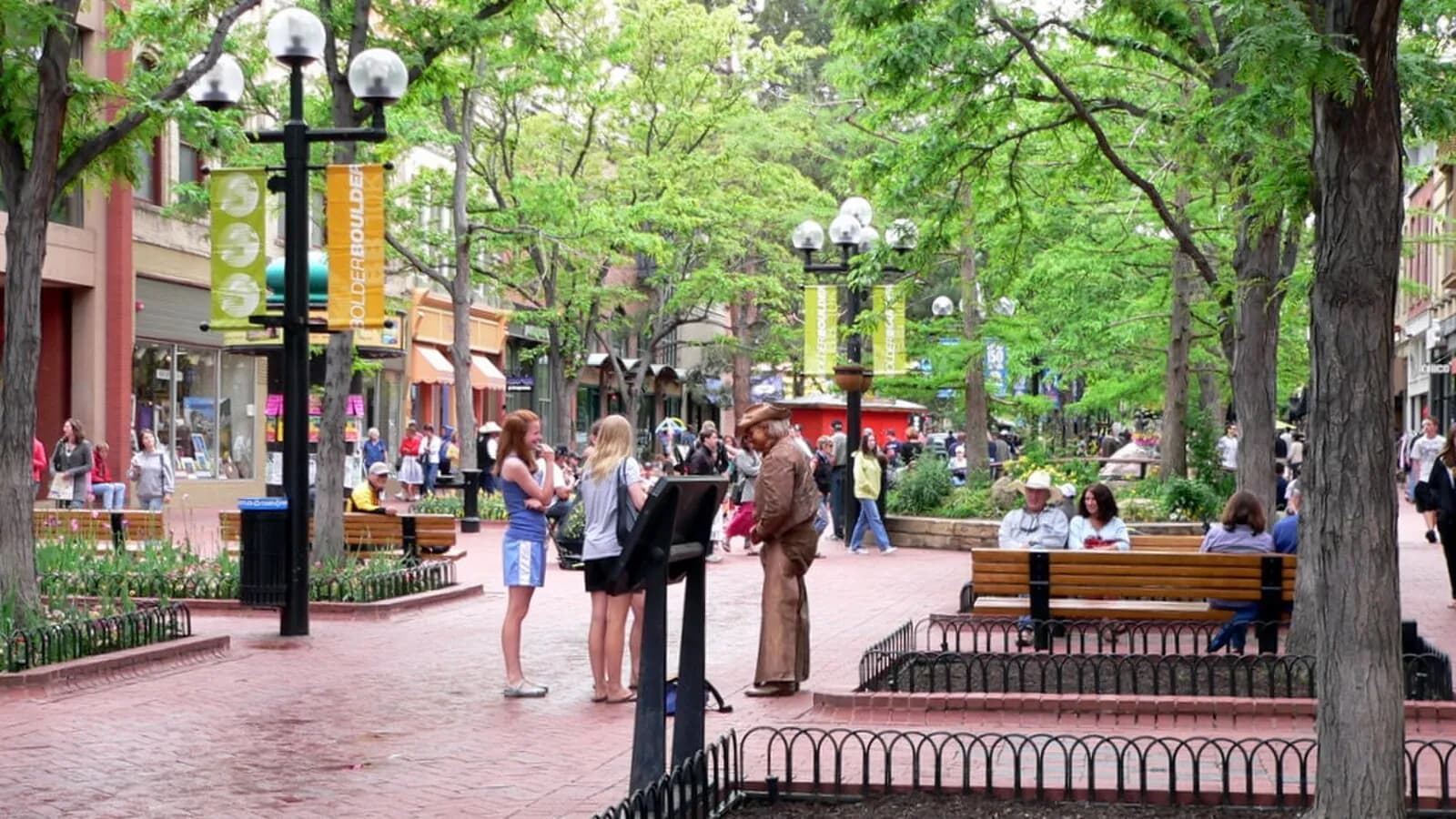
Boulder is a college town that outgrew the label. The University of Colorado brings 35,000 students every fall, and the town around it has added a tech economy and a serious food scene. The Flatirons, five sandstone slabs, are visible from nearly every block, and protected open space surrounds the city on every side. Boulder was settled in 1858, and Chautauqua, founded in 1898, still operates at the base of the Flatirons. Estes Park is the front door to Rocky Mountain National Park, and elk walk through the downtown parking lots. About 6,000 people live there year-round, and the park brings four million visitors a year. The Stanley Hotel, built in 1909, sits on a hill above town. Read our Boulder guide and our Estes Park guide.
Skiing and the mountains
Neither town is a ski town. Boulder's winters are mild by Colorado standards, with daytime highs averaging 45 degrees, and snow in town usually melts within 48 hours. The south-facing trails stay dry most of the winter, and the Flatirons with a dusting of snow make one of the best views on the Front Range, in the guide's words. Estes Park's mountains are about the national park. Longs Peak, the northernmost fourteener in the state at 14,259 feet, dominates the southern skyline, and its summit is a 15-mile round trip that takes most fit hikers 12 to 15 hours. In winter, the park stays open, the east side trails work for snowshoeing, and Hidden Valley has a sledding hill and a small skiing area for lessons. For a ski trip, see the best ski towns in Colorado.
Summer and the outdoors
Boulder's trails start at the edge of town. The Flatirons trails, the Boulder Creek Path and Eldorado Canyon are the draw, and the Boulder guide points to the southern half of the Mesa Trail for fewer people and changing views of the Flatirons. Chautauqua parking fills early, so plan around it. A half-day guided climb in Eldorado Canyon runs $200. In Estes Park, most of the outdoors is inside Rocky Mountain National Park: Bear Lake Road, the Glacier Gorge trails, the Moraine Park meadows and Trail Ridge Road in season. The Bear Lake corridor fills by 6 AM on summer weekends, so use the Park and Ride shuttle. The park has used timed entry reservations, so check its site before you go. See things to do in Boulder, things to do in Estes Park and the best hikes near Denver.
Food and drink
Boulder has the deeper food scene. Frasca Food and Wine on Pearl Street is Michelin-starred, and the James Beard Foundation named it Outstanding Restaurant in 2025. Its Quattro Piatti menu is $150, and its sister restaurant, Pizzeria Alberico, serves pizza at 1730 Pearl Street. Sherpa's has served Nepali, Indian and Tibetan food since 2002, Lucile's does Creole breakfast, and Avery Brewing has been brewing since 1993. In Estes Park, Bird & Jim has served a seasonal menu since 2016, and its wine list has earned a Wine Spectator Award of Excellence every year since 2020. Smokin' Dave's BBQ serves slow-smoked barbecue, and The Rock Inn Mountain Tavern, in a building dating to 1937, hosts live music. Many Estes Park shops and restaurants reduce hours or close from November through March, so check before a winter trip. For a short visit, see our Boulder day trip.
Where to stay
In Boulder, downtown near Pearl Street is the easiest base without a car, with historic and boutique hotels within a short walk. For trailheads, the cottages at Chautauqua sit at the foot of the Flatirons, and Fourmile Canyon puts you closer to climbing and riding. Graduation weekend in early May is the busiest lodging weekend of the year, so book months out or pick another date. In Estes Park, most lodging sits in one of four places: downtown and near the Stanley Hotel, around Lake Estes, along Fall River Road toward the park entrance, or south of town toward Longs Peak. The Fall River Road lodges are the closest to the park's Fall River entrance. Compare where to stay in Boulder, where to stay in Estes Park, historic hotels and our guide to where to stay in Colorado.
Getting there and getting around
Boulder is 30 miles northwest of Denver, a 35 to 45 minute drive on Highway 36 outside rush hour. The Flatiron Flyer bus runs from Denver's Union Station to downtown Boulder in about 50 minutes for $5.25 one way, and in town the free Hop bus runs every 10 minutes during the day. Downtown parking structures charge about $2 per hour. Estes Park is 71 miles northwest of Denver, about 90 minutes via I-25 north to US-36 west through Boulder and Lyons. Denver International is 85 miles east, a two-hour drive. Uber and Lyft fares run $160 to $220 one way, and a rental car is recommended unless you stay in town and use the free summer trolley and the park shuttle. See our Denver weekend drive and our Colorado drives.
When to go
Boulder's guide calls September the best month, with temperatures in the mid-70s, dry trails and every restaurant open. May and June bring wildflowers on the lower trails, July and August reach the low 90s with afternoon storms, and October brings golden light, thinner crowds and lower lodging rates. Estes Park's guide points to late September for the elk rut and fall color, with aspens peaking around September 25 to October 5 in most years. Mid-June brings Trail Ridge Road and early wildflowers, and the guide suggests avoiding July and August weekends, when the town fills to capacity. Trail Ridge Road closes by mid-October and reopens in late May. Winter is quiet, and hotel rates drop 40 to 60 percent. Check our Colorado events calendar and the Colorado fall colors guide.
Which one to pick
Pick Boulder if you want a walkable town with a serious food scene, trails that start at the edge of town and no need for a car. It sits at 5,430 feet, so altitude is not a significant factor for most visitors. Pick Estes Park if Rocky Mountain National Park is the reason for your trip, or if you want elk in town, the Stanley Hotel and the fall elk rut. It sits at 7,522 feet, and you will likely want a car for the park. The two towns share a road: Highway 36 runs from Boulder through Lyons to Estes Park in about 45 minutes, so one trip can take in both. For more ideas, see things to do in Colorado and Boulder vs Denver.