
The feel of each town
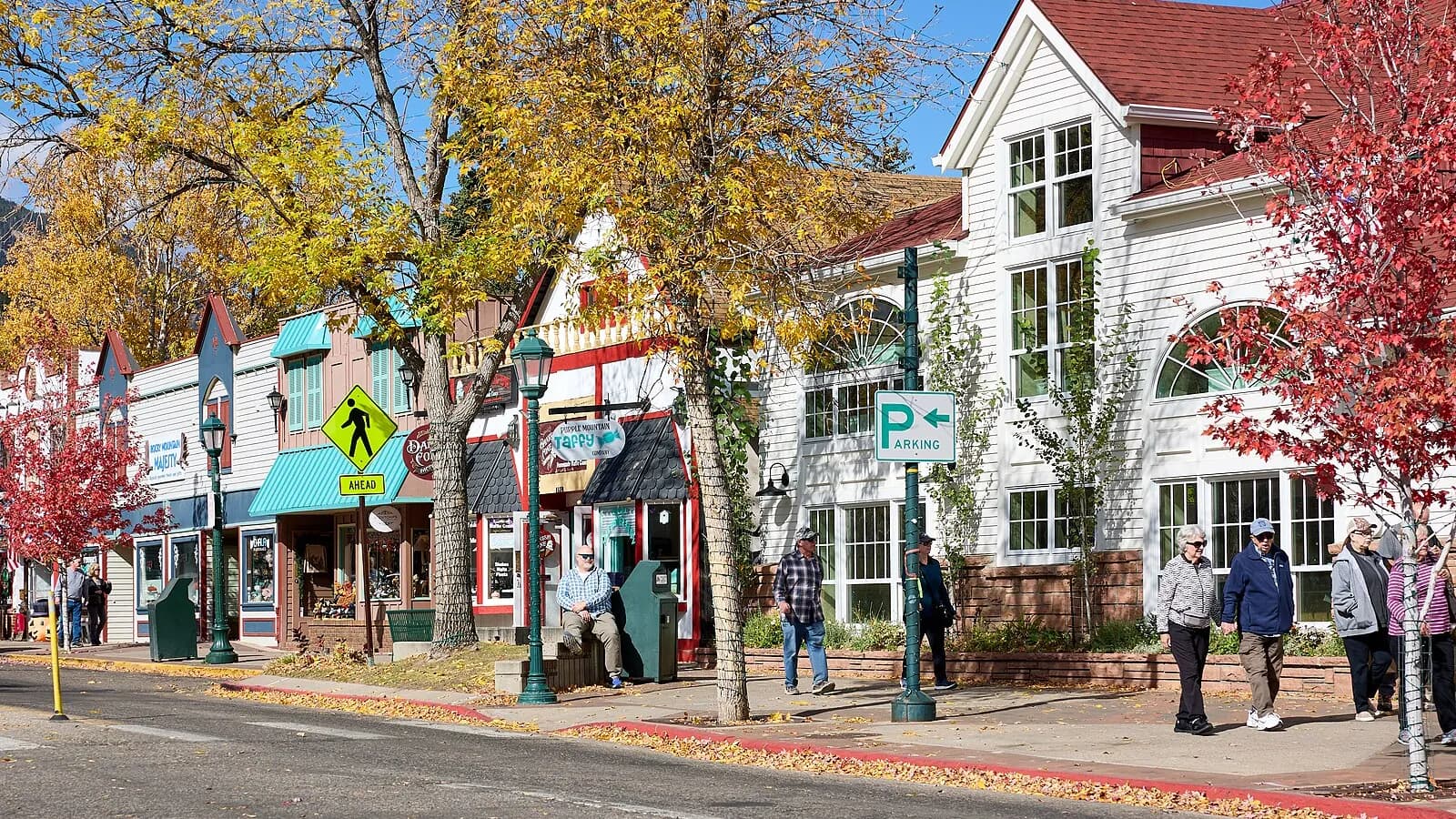
Estes Park is the front door to Rocky Mountain National Park, and elk walk through the downtown parking lots. Joel Estes found the valley in 1859, and the park was designated in 1915. The Stanley Hotel, built in 1909, sits on a hill above town, and Stephen King wrote The Shining after staying there in 1974. It is a working town of about 6,000 year-round residents, with a tourist core along Elkhorn Avenue. Fort Collins is a college city with a brewing habit and a mountain range at the end of the street. It grew from Camp Collins, built in 1862, and Old Town went on the National Register of Historic Places in 1978. It had about 170,000 residents at the 2020 census, but Old Town feels much smaller. Read our Estes Park guide and our Fort Collins guide.
Skiing and the mountains
Neither is a ski town. Estes Park sits at 7,522 feet in a valley where the Big Thompson River meets Fall River, with the peaks of the Continental Divide to the west. Longs Peak, at 14,259 feet, dominates the southern skyline. In winter, the park stays open, the east side trails work for snowshoeing, and Hidden Valley has a sledding hill and a small skiing area for lessons. Trail Ridge Road closes by mid-October and reopens in late May. Fort Collins says plainly that nobody comes here to ski out the door, and its mountains are close but not in town. In winter, the trails at Lory State Park stay open for hiking, snowshoeing and cross-country skiing. See the best ski towns in Colorado and our Colorado winter road trips.
Summer and the outdoors
Most of what Estes Park offers is inside Rocky Mountain National Park: Bear Lake Road, the Glacier Gorge trails, the Moraine Park meadows and Trail Ridge Road in season. The Bear Lake corridor fills by 6 AM on summer weekends, so use the Park and Ride shuttle. In town, there is the Riverwalk and the Lake Estes Trail. Fort Collins fills its days with Horsetooth, Lory State Park and the Poudre River. Rafting on the Poudre runs from May through August, and the tourism office counts 285-plus miles of trails, many along the Poudre River and Spring Creek. Soapstone Prairie Natural Area covers more than 28 square miles of grassland north of town. See things to do in Estes Park, things to do in Fort Collins and our Colorado camping guide.
Food and drink
Estes Park keeps things casual. Bird & Jim has been a dining room since 2016, and its wine list has earned a Wine Spectator Award of Excellence every year since 2020. Smokin' Dave's BBQ serves slow-smoked platters, The Rock Inn Mountain Tavern sits in a building dating to 1937, and Poppy's Pizza & Grill on the Riverwalk pours about 100 beers. Fort Collins is known for beer. The tourism office counts more than 20 craft breweries and says the city produces 70 percent of Colorado's craft beer. New Belgium, founded in 1991, offers a free 45-minute tour, and Odell, founded in 1989, is known for its patio and mountain views. In Old Town, Jax Fish House brings serious seafood, and the Silver Grill Cafe has been open since 1933.
Where to stay
In Estes Park, most lodging sits in one of four places: downtown and near the Stanley Hotel, around Lake Estes, along Fall River Road toward the park entrance, or south of town toward Longs Peak. The Fall River Road lodges are the closest to the park's Fall River entrance, which helps with early entry. In Fort Collins, Old Town puts you on foot near nearly everything, from The Elizabeth to the 1923 Armstrong and the 1904 Edwards House. South College suits anyone here for campus, and Horsetooth Reservoir and the Poudre Canyon trade the city for campsites and cabins. Compare where to stay in Estes Park, where to stay in Fort Collins, historic hotels and our guide to where to stay in Colorado.
Getting there and getting around
Estes Park is 71 miles northwest of Denver, about 90 minutes via I-25 north to US-36 west through Boulder and Lyons. Highway 34 through Big Thompson Canyon from Loveland is an alternate. Denver International is 85 miles away, a two-hour drive, and the Estes Park Shuttle runs from the airport for about $55 each way with a reservation. In town, the free trolley loops around Elkhorn, the Stanley and the YMCA area in summer. Fort Collins is 60 miles north of Denver International Airport, about 60 minutes by car on I-25, and Landline and Groome Transportation run airport shuttles. Transfort buses are currently fare-free, and the MAX line connects downtown, midtown and CSU. Fort Collins's tourism office lists Estes Park at less than an hour away. See our Colorado drives.
When to go
Estes Park's best window is late September, when the elk rut peaks in the last week of the month and the aspens peak around September 25 to October 5 in most years. Mid-June brings Trail Ridge Road and early wildflowers. Avoid July and August weekends, when the town fills to capacity. Winter is quiet, and hotel rates drop 40 to 60 percent. Fort Collins is prime for the outdoors in summer, with June averaging 80 and July 85. September averages 75 and 45, and its guide calls fall the sweet spot for walking and hiking. January averages 40 and 13, but the town does not shut down. Garden of Lights runs December 11 to 27 in 2026, and the Autumn Gold Festival fills Estes Park in mid-September. Check our Colorado events calendar.
Which one to pick
Pick Estes Park if Rocky Mountain National Park is the reason for the trip and you want to be at the entrance before the timed window opens. It sits at 7,522 feet, so take a day to adjust before a high hike. Pick Fort Collins if you want to walk a real downtown, drink very good beer and still be on a trail or a river within minutes, without renting a car. It sits at about 5,000 feet, and the national park is less than an hour away, so the two pair well on one trip. For more ideas, see things to do in Colorado, our Colorado fall colors guide and Boulder vs Fort Collins.