
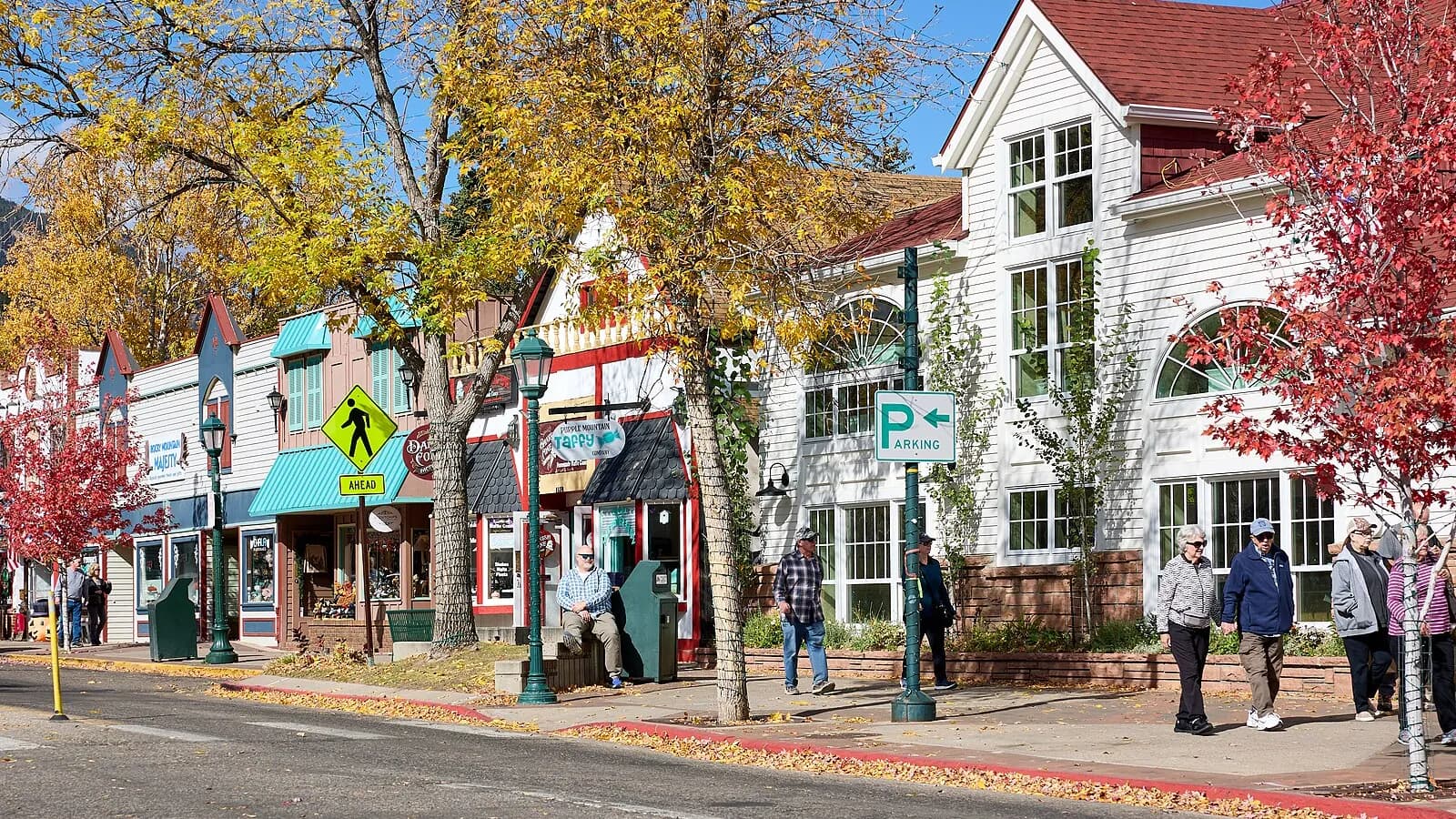
The feel of each town
Estes Park is the front door to Rocky Mountain National Park, and elk walk through the downtown parking lots. Joel Estes found the valley in 1859, the park was designated in 1915, and the Stanley Hotel, built in 1909, sits on a hill above town. About 6,000 people live there year-round, and the park brings four million visitors a year. Vail was built to ski, with no mining past. Pete Seibert and Earl Eaton saw the back bowls in 1957, and the first lift ran on December 15, 1962. The village was modeled on the Bavarian ski towns that 10th Mountain veterans had seen in Europe, and it is pedestrian-only. Vail has roughly 5,500 year-round residents and swells to 35,000 on a busy ski day. Read our Estes Park guide and our Vail guide.
Skiing and the mountains
Vail is the ski town of the pair. The back bowls top out at 11,570 feet on Wildcat Ridge, and Blue Sky Basin tops out around 11,250 feet. Ski season runs from mid-November through mid-April, and in a good snow year the back bowls open by December 10. On a powder morning, the guide suggests the Eagle Bahn Gondola in Lionshead, where the line is consistently shorter. Estes Park's mountains are about the national park. Longs Peak, the northernmost fourteener in the state at 14,259 feet, dominates the southern skyline, and Trail Ridge Road tops out at 12,183 feet. In winter, the park stays open, the east side trails work for snowshoeing, and Hidden Valley has a sledding hill and a small skiing area for lessons. See the best ski towns in Colorado, Breckenridge vs Vail and ski-in ski-out hotels.
Summer and the outdoors
In Estes Park, most of the outdoors is inside Rocky Mountain National Park: Bear Lake Road, the Glacier Gorge trails, the Moraine Park meadows and Trail Ridge Road in season. The Bear Lake corridor fills by 6 AM on summer weekends, so use the Park and Ride shuttle. The park has used timed entry reservations, so check its site before you go. Vail's summer runs from mid-June through early October. The Eagle Bahn Gondola opens for hiking and biking in mid-June, you can hike from East Vail, and concerts play at the Ford Amphitheater. July is peak season, with the Bravo festival, the dance festival and warm days in the 70s. Some Vail trailheads have no parking, so check before you drive. See things to do in Estes Park and things to do in Vail.
Food and drink
Vail has a long fine dining tradition. Sweet Basil has anchored fine dining in Vail Village since 1977, when it opened as a 47-seat room on Gore Creek Drive. La Tour serves classic French cooking, Matsuhisa Vail has been open since 2011, and The Red Lion has been an apres-ski staple since it opened in February 1963. Vendetta's has served Italian food and pizza since 1983, with a cheese slice at $4. In Estes Park, Bird & Jim has served a seasonal menu since 2016, and its wine list has earned a Wine Spectator Award of Excellence every year since 2020. Smokin' Dave's BBQ serves slow-smoked barbecue, and The Rock Inn Mountain Tavern, in a building dating to 1937, hosts live music. Hours shift by season in both towns. Many Vail restaurants close for a stretch between seasons, and many Estes Park shops and restaurants reduce hours or close from November through March.
Where to stay
In Estes Park, most lodging sits in one of four places: downtown and near the Stanley Hotel, around Lake Estes, along Fall River Road toward the park entrance, or south of town toward Longs Peak. The Fall River Road lodges are the closest to the park's Fall River entrance, which helps if you want to enter early in the morning. In Vail, Vail Village and Lionshead are the two main bases, and both put you near a gondola. Hotels farther out on the Frontage Road and in West Vail trade the village scene for easier driving, and the free town bus connects them. Vail lodging prices double or triple in the week between Christmas and New Year. Compare where to stay in Estes Park, where to stay in Vail, historic hotels and our guide to where to stay in Colorado.
Getting there and getting around
Estes Park is 71 miles northwest of Denver, about 90 minutes via I-25 north to US-36 west through Boulder and Lyons. Denver International is 85 miles east, a two-hour drive, and the Estes Park Shuttle runs from the airport for about $55 each way by reservation. A rental car is recommended unless you stay in town and use the free summer trolley and the park shuttle. Vail is 100 miles west of Denver on I-70, about two hours without traffic, though ski-season weekend traffic through the Eisenhower Tunnel can stretch it to four hours or more. Eagle County Regional Airport is 35 miles west, with shuttles for about $50 each way, and shuttles from Denver International run about $110 each way. Once in Vail, the free town bus replaces a car. See our Colorado winter road trips and our Colorado drives.
When to go
Estes Park's guide points to late September for the elk rut and fall color, with aspens peaking around September 25 to October 5 in most years. Mid-June brings Trail Ridge Road and early wildflowers, and the guide suggests avoiding July and August weekends, when the town fills to capacity. Winter in Estes Park is quiet, and hotel rates drop 40 to 60 percent. Vail's guide points to late January through February for the deepest snow, and the first two weeks of December for shorter lines before holiday rates. July is the summer peak, and September brings golden aspens from the second week through month end. Avoid Presidents Day weekend, and plan around Vail's mud seasons, from late April to early June and from October to mid-November. Check our Colorado events calendar and our Colorado fall colors guide.
Which one to pick
Pick Estes Park if Rocky Mountain National Park is the reason for your trip, or if you want elk in town, the Stanley Hotel and the fall elk rut. It is the shorter drive, at 71 miles from Denver, though you will likely want a car for the park. Pick Vail if skiing is the goal, especially the back bowls, or if you want a pedestrian-only village with free buses, fine dining and summer music and dance festivals. Vail Village sits higher, at 8,150 feet, so drink extra water on the first day. In September, both towns have aspens turning gold. For more ideas, see things to do in Colorado and Steamboat Springs vs Vail.