
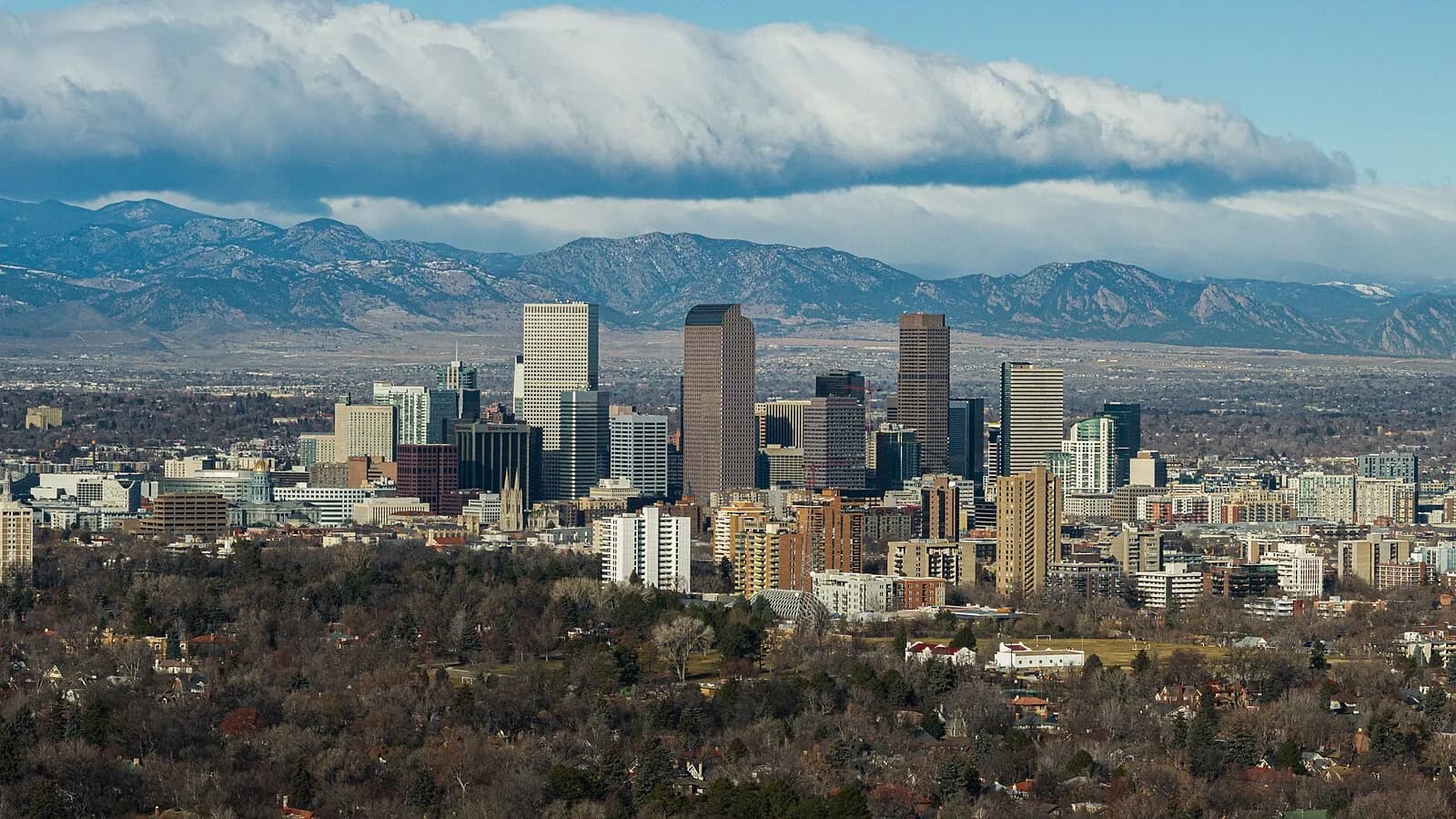
The feel of each town
Denver was founded in November 1858 as a supply post for the Pike's Peak Gold Rush. Silver money built the mansions in Capitol Hill, and the railroads made it the trading floor of the Rocky Mountain West. Its guide describes a Western city with a blue-collar backbone, tech money and a genuine arts scene, where cowboy boots and Patagonia vests share the same block. Fort Collins is a college city with a brewing habit and a mountain range at the end of the street. It began as Camp Collins, built in 1862, and Colorado State University grew from a college that put up its first classroom building in 1879. About 170,000 people lived there at the 2020 census, but its guide says that if you stay in or near Old Town, it feels much smaller. Read our Denver guide and our Fort Collins guide.
Skiing and the mountains
Neither city is a ski town. Denver is the hub for ski trips, with I-70 running west to the mountains. Its guide says a 6 AM departure gets you to Keystone before the rush, while anything after 7 turns into a two-and-a-half-hour slog, and Colorado's Traction Law applies on I-70 from September 1 to May 31. Fort Collins is not a resort either, and its guide says nobody comes here to ski out the door. In winter, the trails at Lory State Park stay open for hiking, snowshoeing and cross-country skiing. Fort Collins sits at about 5,000 feet, and altitude matters more if you head up the Poudre Canyon or into Rocky Mountain National Park. See the best ski towns in Colorado and our Colorado winter road trips.
Summer and the outdoors
Denver's outdoors need a short drive. Red Rocks works for a morning walk or a show, and the guide suggests renting a car for the days you go to Red Rocks or Mount Blue Sky, which has used timed reservations. July is hot in Denver, with highs touching 95 and afternoon thunderstorms almost daily once the monsoon arrives. Fort Collins has more right outside town. The tourism office counts 285-plus miles of trails, many along the Poudre River and Spring Creek, and rafting on the Poudre runs from May through August. Horsetooth Reservoir, Lory State Park and Soapstone Prairie, with more than 28 square miles of grassland, fill the days. June averages a high of 80 and July 85. See things to do in Denver, things to do in Fort Collins and the best hikes near Denver.
Food and drink
Denver's picks are spread across neighborhoods. Beckon is a Michelin-starred chef's counter in RiNo that seats 18, Hop Alley serves Chinese cooking on Larimer Street, and Annette in Aurora is a James Beard Award winner. Safta, opened in 2018, bakes pita in a wood-fired oven, and My Brother's Bar says it has served drinks since 1873. Fort Collins runs on beer. The tourism office counts more than 20 craft breweries and says the city produces 70 percent of Colorado's craft beer. New Belgium, founded in 1991, and Odell, founded in 1989, both run busy taprooms, and CooperSmith's is the city's oldest brewpub. For dinner, Ginger and Baker fills a historic grain mill, and the Silver Grill Cafe has been on Walnut Street since 1933. Read our guide to where to eat in Denver.
Where to stay
In Denver, downtown and LoDo put you near Union Station and the theaters, RiNo has newer hotels near breweries and murals, and Cherry Creek suits shoppers. Downtown is the easiest base if you would rather skip a rental car. In Fort Collins, Old Town puts you on foot near nearly everything, from The Elizabeth to the 1923 Armstrong and the 1904 Edwards House. The Armstrong was the tallest building in town when it opened. South College suits anyone here for campus, and Horsetooth Reservoir and the Poudre Canyon trade the city for campsites, cabins and a longer drive. Compare where to stay in Denver, where to stay in Fort Collins, historic hotels and our guide to where to stay in Colorado.
Getting there and getting around
Denver International Airport sits 25 miles northeast of downtown Denver, and the A Line train runs to Union Station. Taxis and rideshares run $45 to $65, and the drive takes 30 to 45 minutes depending on rush hour. Downtown is walkable, the light rail covers most of the metro area, and downtown parking costs $25 to $40 per day. Fort Collins is 60 miles north of Denver International, and the tourism office puts both the airport and downtown Denver about 60 minutes away by car via I-25. Without a car, Landline runs shuttles from the airport and Groome Transportation runs hourly service. Once there, Transfort buses and the MAX line connect downtown, midtown and CSU, and bikes are the classic way around. On-street parking in the core generally has a 2-hour limit. See our Denver weekend drive and our Colorado drives.
When to go
Denver's guide points to September and October and calls the last week of September the best single week, with days around 75 and nights in the 40s. January is cold and sunny, with the National Western Stock Show in the middle two weeks, and March is the snowiest month. The Great American Beer Festival runs the first weekend of October. Fort Collins calls summer prime time for the outdoors, with average highs of 80 in June and 85 in July, and fall the sweet spot for walking and hiking, with September averaging 75 and 45. Winter is colder than the sunshine suggests, with January averaging 40 and 13, but the town does not shut down. The free First Friday Art Walk runs on the first Friday of each month. Check our Colorado events calendar and our Denver weekend guide.
Which one to pick
Pick Denver if you want a big city with neighborhood restaurants, museums, sports and an airport train, and a hub for mountain day trips. Stay downtown and you can skip the car. Pick Fort Collins if you want a smaller, walkable Old Town, craft breweries, and trails and rivers within minutes, with a college town feel. Both sit well below the mountain towns, at 5,280 feet in Denver and about 5,000 feet in Fort Collins. I-25 links them in about an hour, so it is easy to spend time in both. For more ideas, see things to do in Colorado, Boulder vs Fort Collins and Boulder vs Denver.