
The feel of each town
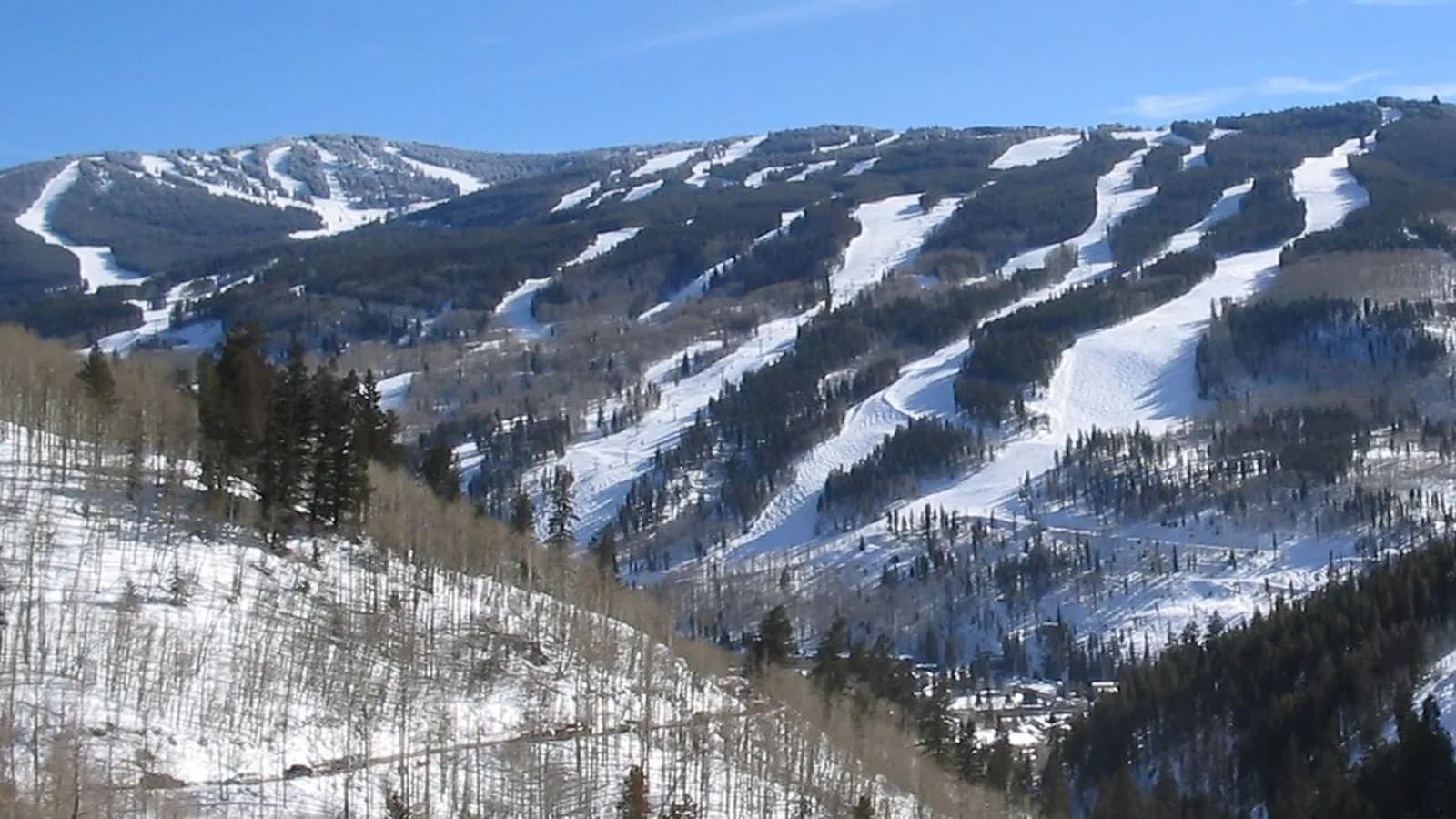
Vail was built to ski. It has no mining past and no main street in the traditional sense. Pete Seibert and Earl Eaton saw the back bowls in 1957, and the first lift ran on December 15, 1962. The village was modeled on Bavarian ski towns and is pedestrian-only, with parking structures tucked out of sight. Roughly 5,500 people live there year-round, and the town swells to 35,000 on a busy ski day. Winter Park began as a business plan. On April 20, 1932, Doc and Helen Graves built 10 small tourist cabins and called the place Hideaway Park, and in 1978 the village took the name of the ski area next door. Its downtown runs along US Highway 40 rather than around a square, and the resort base sits about three miles away. Read more in our Vail guide and our Winter Park guide.
Skiing and the mountains
Vail's draw is the back bowls. They top out at 11,570 feet on Wildcat Ridge, and Blue Sky Basin tops out around 11,250 feet. The mountain opens the front side first and adds the back bowls as snow builds, and a good snow year sees them open by December 10. On a powder morning, the Vail guide suggests the Eagle Bahn Gondola in Lionshead, where the line is consistently shorter. Winter Park has 3,081 skiable acres and 23 lifts, with a 9,000 foot base and a 12,060 foot summit, and it reports more than 344 inches of snow in an average year. Just 8 percent of the terrain is rated beginner. Mary Jane, known for bumps and trees, has its own base and a shorter season. Volunteer hosts lead a free tour daily at 10 AM, snow permitting. See the best ski towns in Colorado.
Summer and the outdoors
Summer in Vail runs from mid-June through early October. You can hike from East Vail, take the Eagle Bahn Gondola up to Epic Discovery, or catch a concert at the Ford Amphitheater. July is peak season, with the Bravo festival and the Vail Dance Festival, and the GoPro Mountain Games bring paddling, climbing and trail running to town in early June. In Winter Park, Trestle Bike Park runs more than 40 miles of lift-serviced downhill trails, and the resort counts over 600 miles of trails across the Winter Park and Fraser area. Events and live music fill Hideaway Park downtown, with summer days in the 60s and 70s. Rollins Pass climbs to the Continental Divide but needs a high clearance, four-wheel-drive vehicle. See things to do in Vail and things to do in Winter Park.
Food and drink
Vail leans toward fine dining. Sweet Basil has anchored Vail Village since 1977, when Kevin Clair opened a 47-seat room on Gore Creek Drive. La Tour serves classic French cooking, with a pan-roasted duck breast at $55, and Matsuhisa Vail has been open since 2011. The Red Lion opened in February 1963 and is an apres-ski staple, and Vendetta's sells a cheese slice for $4. In Winter Park, Tabernash Tavern, north of town, is the fine dining choice in the valley, with an 8 oz filet mignon at $60. Fontenot's has cooked seafood and steaks with a New Orleans lean since 1990, Hernando's Pizza Pub has made pizza since 1967, and Rudi's Deli is the cheap, fast lunch. Restaurants in both towns can close or change hours between seasons, so check before you go.
Where to stay
In Vail, Vail Village and Lionshead are the two main bases, and both put you near a gondola. Hotels farther out on the Frontage Road and in West Vail trade the village scene for easier driving, and the free town bus connects them. In Winter Park, slopeside condos sit at the resort base, while downtown hotels and small lodges put you near restaurants and on the free bus. Downtown also puts you close to summer events and live music in Hideaway Park. Ranches up the valley trade convenience for space and activities on site. The base and downtown are about three miles apart, so choose with that in mind. Compare where to stay in Vail, where to stay in Winter Park and our guide to where to stay in Colorado.
Getting there and getting around
Vail is 100 miles west of Denver on I-70, about two hours without traffic. On ski-season Friday afternoons and Saturday mornings, the drive can stretch to four hours or more. Eagle County Regional Airport is 35 miles west of Vail, with shuttles for about $50 each way. Free buses link Vail Village, Lionshead, West Vail, East Vail and Cascade Village, and village parking runs $30 to $50 per day. The resort lists Winter Park as a 75-mile drive from the Denver metro area via I-70 and US Highway 40, crossing Berthoud Pass at 11,307 feet. In ski season, the Winter Park Express train runs from Denver Union Station to the base, with fares starting at $19. The Lift, a free bus, serves Winter Park, Fraser and Granby, and resort parking lots are free. For more road trips, see our Colorado drives.
When to go
In Vail, late January through February brings the most reliable storm cycles. The first two weeks of December are a sweet spot, with shorter lines and holiday rates not yet in effect. Avoid Presidents Day weekend and the week between Christmas and New Year. Golden aspens arrive from the second week of September through month end. In Winter Park, winter is the main event. Last season, the Winter Park side ran from October 31, 2025 to April 19, 2026, while Mary Jane ran from January 9 to March 28, 2026. Lifts open an hour early on weekends from December 5, 2026 to April 4, 2027, and the Torchlight Parade is on December 24, 2026. Vail has mud seasons in spring and fall, and fall is quieter in Winter Park. Check our Colorado events calendar before you book.
Which one to pick
Pick Vail if the back bowls are the reason for your trip, or if you like a planned, pedestrian-only village with a long fine dining tradition. Its village sits at 8,150 feet. Pick Winter Park if a short trip from Denver matters most, or if you want steep terrain, the bumps at Mary Jane, a ski train from Union Station and a big downhill bike park in summer. Its town sits at 9,000 feet, and its downtown is a highway strip rather than a village, with the base about three miles away. Both towns work without a car once you arrive, and both run free buses. For another close match, see Breckenridge vs Vail, or browse things to do in Colorado.